Wildlife Habitat Sites

American Landfill, Waynesburg, Ohio
Certified since 2004
American Landfill consists of approximately 1,100 acres of land, of which about 150 acres are managed as a wildlife habitat.The site contains a variety of habitats, including different types of wetlands, open grassland, and upland forest.
Since 2003, the wildlife team and elementary students participate in an annual native tree planting event. The wildlife team’s goal is to plant 1,000 trees and thus far, more than 900 trees have been planted. Team members test the soil pH to make sure appropriate tree species are selected and work to order only native trees from their local landscaper to ensure the trees are planted in appropriate places. White pine and red maple trees are commonly planted. Each month, a team of three employees regularly monitor the trees. Local students from all grade levels are invited to participate in this annual tree planting event. In addition, the wildlife team gives three to six tours of the tree planting area each year through a partnership with the Stark County Health Department, Environmental Education Division.
The 10-acre mitigation wetland on the western boundary of the site is required by law. The wildlife team went above and beyond the requirements with conservation education, additional annual wildlife inventories, and by planting supplemental and enhancement plantings with a wetlands consultant. In 2009, over 3,000 native wetland plants were planted including American bur-reed (Sparganium americanum), American white waterlily (Nymphaea tuberosa), and three square rush (Scirpus americanum). In 2010, over 1,500 plants and trees were planted including water willow (Decodon verticillatus), swamp white oak (Quercus bicolor), and black locust (Robinia pseudoacacia).
Phragmites australis is a non-native, invasive plant which disrupts the native wetland plant community. In 2010, the wildlife team partnered with a University of Akron biology student on a phytoremediation study so that the Phragmites australis on their facility could be used for research purposes. The title of the study was “An evaluation of the phytoremediation potential of Phragmites australis for acid mine drainage”. The purpose of the study was to determine if Phragmites australis is able to absorb acid mine drainage contamination. In addition to the study, the wildlife team has begun a program to eradicate Phragmites australis from different areas of their property.
Although Canada geese are historically migratory birds, ‘resident’ populations have established themselves in many parts of the United States. Resident populations have become established in temperate climates due to the large supply of readily available resources. Due to their high numbers and their tolerance for humans, Canada geese are considered a nuisance species at the American Landfill. The wildlife team observes the Canada geese eating many of the native plants in the wetland, causing ecological issues. The wildlife team researches and carries out non-lethal scare and hazing tactics, which do not harm the geese. In winter 2012, the wildlife team purchased four faux dogs and placed them around the wetlands. The dogs are periodically moved with hopes that the faux dogs with deter the Canada geese from the wetlands. The wildlife team will continue to research and experiment with different humane Canada geese control methods to determine the best solution for their property.
Anderson Landfill, Anderson, California
Anderson Landfill Inc. is located just outside Anderson in Sacramento Valley, California. The 1,200-acre site is designated as a Class III landfill and the team takes many measures to ensure that the site is environmentally friendly. These include capturing methane gas to provide energy for the site and fostering wildlife habitat for native bluebirds. Through these activities the team promotes wildlife habitat, engages and enhances awareness of employees, and preserves wildlife habitat for future generations.
The team installed six bluebird boxes throughout the site to aid in native western bluebird habitat in the region. The team installed the two newest boxes on-site in strategic locations as well, informed by monitoring data and where bluebirds have been sighted.
The site provides habitat for over 100 bluebirds during migration season. The team chose to implement this project due to the large population of western bluebirds on-site.
The team monitors the bluebird boxes weekly and monthly, tracking sightings of bluebirds and whether they are utilizing each box. The team heavily involves employees in the monitoring process of the project, engaging them in monitoring activities throughout the year. Since implementing this project the team has seen a definite increase in western bluebirds onsite.
Atascocita Recycling and Disposal Facility, Humble, Texas
Certified since 2010
The Atascocita Recycling and Disposal Facility is located in Humble, Texas, about 17 miles north-northeast of Houston. The lands surrounding the 804-acre site are vacant fields and residential homes, although the open areas are being developed rapidly. A variety of habitats are found on-site, including coastal prairie, savannah forest, early successional forest, densely wooded area, bottomland woods and two detention ponds.
The site has been used as a municipal solid waste landfill since 1983. Before it was a landfill, the site served as a disposal area for wastes from local oil and gas production beginning in the late 1970s, and the impacts from those activities made the site unsuitable for residential use. Waste Management worked closely with Harris County and the Texas Department of Health to remediate the site, excavate the existing waste and dispose of it properly in the new landfill.
The mission of the facility's wildlife management plan is to expand biological diversity and improve habitat quality on-site, while engaging and educating the local community on vital environmental principles.
Projects in progress include supporting targeted species through the creation of nesting structure, cover and a pond, creating a centralized location both for habitat enhancement activities and community involvement and learning, and controlling selected invasive plant species.
With the assistance of a number of community volunteers, the wildlife team built and installed a chimney swift tower, screech and owl boxes, gray fox dens and a purple martin house. It has also created a 10-acre habitat area, including a refurbished barn that serves as a wildlife habitat center for volunteer and learning activities. The team also excavated and created a small pond to provide water and high-quality aquatic habitat in this portion of the property, planted a pollinator garden here, and removed invasive species from a number of areas.
Waste Management elected to give its community partners and volunteers a major voice in selecting projects, and activities have drawn participation by a large and growing number of local organizations, including three local elementary schools, the Houston Zoo, Texas Parks & Wildlife, and Texas Master Naturalists.
Atlantic Waste Disposal, Waverly, Virginia
Certified since 2010
Atlantic Waste Disposal covers 1,315 acres in Sussex County, Virginia. The five-member wildlife team manages 200 acres for wildlife. In addition to the active landfill footprint and managed areas, the site is covered with 800 acres of mixed forests, grasslands, wetlands, and transitional areas available to wildlife. The site's 12 ponds provide excellent habitat for different types of waterfowl, amphibians, and fish.
Many employees expressed interest in studying the eastern bluebird life cycle and the wildlife team installed 12 bluebird nest boxes with predator guards in June of 2009. Two dedicated employees monitor and maintain the boxes monthly. Bluebirds and tree swallows are regularly spotted around the nest boxes, and 17 bluebird chicks successfully fledged since 2010.
A butterfly garden was planted in 2009 in order to make the site more pollinator friendly. A variety of different species were planted, including beebalm, azalea, marigolds, and eastern redbud. Employees maintain and enhance the pollinator garden as needed.
The facility opened a 20-acre pond to employees and guests for recreational fishing. The Virginia Department of Game and Inland Fisheries conducted a species count in May 2009, and found largemouth bass, red ear sunfish, and bluegill. The wildlife team built a dock for easier fishing access, and all catches are identified and weighed at the dock. The wildlife team also implemented several deer hunting regulations on site. Results from fishing and hunting endeavors are kept in a log to allow the wildlife team to monitor the populations.
The wildlife team also currently hosts tours by Head Start programs and youth groups; they plan to expand the tours to include the nest boxes as an educational tool. Future habitat projects include wetland vegetation plantings and the construction of wood duck boxes.
Austin Community Landfill, Austin, Texas
Certified since 2006
The Austin Community Landfill resides principally on abandoned agricultural property on 360 acres outside of Austin, Texas. Acquired by Waste Management in the 1980s, the site serves as a private landfill for the disposal of municipal waste for the communities of Travis County, Texas. The site’s habitat is composed mainly of grasslands; however, there are two acres of freshwater wetland and ten acres of Texas wildflower meadow. Recent suburban expansion in the area intensified the need for wildlife habitat protection.
The landfill site is working to develop a positive community relationship with suburban neighborhoods and to operate the landfill in an environmentally conscious manner. The wildlife team carefully developed a management plan to work toward an increase in biodiversity, which includes one-, three- and five-year goals. In 2005, the program was initiated with the formation of a site species inventory.
Since then, many of the proposed wildlife projects to improve biodiversity have taken flight. A butterfly garden was planted using native plants to increase the biodiversity of insect populations and create a migration stopover site for hummingbirds. In 2008, the wildlife team worked with a naturalist and the Native Bee society to plant a bee garden and, in 2010, the garden began expanding into a bee prairie. Another project is a wildflower meadow and prairie, which were also planted with native species and grasses in 2006. In 2007, an acre of native wildflowers was integrated into the landscaping on-site; additional seeds are added twice a year. Nest boxes have also been constructed and installed for purple martins, Eastern bluebirds, screech owls, chickadees and wood ducks. These boxes are monitored and maintained annually for nesting activity. Recently, a chimney swift tower and bat houses have been installed to provide roosting sites.
In addition to wildlife enhancement projects, the wildlife team has also worked to create a 2.1-mile nature trail for the public. In 2010, along with student volunteers, the wildlife team started a winter clean-up of trash and debris on the trail to keep wildlife from eating trash and litter. The team has labeled plants along the hiking trail to educate visitors during the plant walks. In 2011, the wildlife team partnered with the Travis Audubon Society, neighbors and Texas naturalists to identify and count birds. More than 200 birds were seen and 38 species identified.
Autumn Hills, Zeeland, Michigan
Certified since 2011
Autumn Hills RDF is located in Zeeland, Ottawa County, Michigan. Ninety-nine acres of the 400-acre site are permitted for landfill use. Approximately 20 acres are leased for agriculture and 282 are managed wildlife habitat. The Autumn Hills RDF has been working with the Zeeland community to protect wildlife and provide recreational activities since the facility was developed. Staff from the facility has participated in many local conservation groups and activities, including participating in the Holland Fish and Gun Club’s Youth Conservation Day for the past 15 years. Autumn Hills is also working with Zeeland Township in planning future outdoor recreational activities for the local residents as well as the surrounding communities.
“It takes a village to raise a child. That saying certainly applies at Autumn Hills. Without the active engagement of our volunteer groups, earning this prestigious certification may not have been possible,” said Randy Dozeman, Sr. District Manager of Autumn Hills, Waste Management. “To see Waste Management employees working side by side with our neighbors and customers to improve the environment brings back a real sense of community for everyone. I can truly say I am proud of what we all have accomplished here.” According to Zeeland Township Supervisor Glenn Nykamp, "Zeeland Charter Township is proud of the working relationship we have with Autumn Hills Landfill. It is exciting for us, as well as Waste Management, to be a part of the Wildlife at Work Certification they have received. Over the years, we have participated on various projects with WM and are looking forward to this Wildlife Habitat Council program and other possible recreation activities in the future. Congratulations to Waste Management, Autumn Hills Landfill and all the staff and employees for their continued involvement and support in the community."
Bethel Landfill, Newport News, Virginia
Located in the Chesapeake Bay region approximately five miles east of Newport News, Virginia, the Bethel Landfill utilizes the site’s 392 acres to create a habitat program focused on conservation of bird, bats, and turtles. Habitats found at the Bethel Landfill include grassland, vegetated wetland, woodland, and landscaped areas. The United States Department of Agriculture Wildlife Services consults with Bethel Landfill on project planning and monitoring.
In April 2018, two purple martin colony houses were installed near the newly established pollinator garden for the benefit of purple martins, a species that are dependent upon man-made structures for breeding. Purple martins have site fidelity, meaning they return to the same location each year to nest. The Bethel Landfill Wildlife Team observed juvenile purple martins at the colony house and are prepared for nests to be built during the 2019 breeding season.
Ponds located at the Bethel Landfill are ideal habitat for turtles. Four aquatic turtle species (snapping, two types of sliders, and cooter) and one terrestrial turtle species (Eastern box turtle) have been identified. Logs placed in the ponds by Bethel Landfill staff provide basking opportunities for the turtles and road signs placed throughout the property alert staff to be aware of turtles crossing the roads.
Other supporting projects in the Bethel Landfill habitat program include phragmites control in the pond areas, seven bat boxes, 22 bluebird boxes, and a pollinator garden with insect hotel.
Bluff City Transfer Station, Elgin, Illinois
Certified since 2009
Located adjacent to the Bluff Spring Fen Nature Preserve, the Bluff City Transfer Station encompasses 15 acres that include habitats such as grasslands, meadows and wetlands. The wildlife team actively manages six acres of the property for the benefit of wildlife, including pollinators and grassland birds.
The team continues to manage its existing projects, including managing grasslands, maintaining a green roof and controlling invasive plant species. The grasslands are mowed once per year in late fall, after grassland birds have completed their nesting season. The team mows the grasses each year to promote thicker growth so that the grasses provide better-quality habitat for wildlife. The team maintains its green roof by pulling invasive species and other weeds twice per year, in the spring and summer, and by enhancing the roof’s appearance as needed. The team also removes invasive species such as Canada thistle, purple loosestrife and crown vetch throughout the property as needed.
In the spring of 2010, the wildlife team planted prairie grass and wildflower seeds on the islands in front of the building. This project was implemented to provide habitat for insects such as bees, as well as to make the property more attractive. The team plans to continue monitoring the planted areas, including monitoring for the establishment of invasive species.
Bucks County Landfills - Warner Properties, Morrisville, Pennsylvania
Certified since 2001
Bucks County Landfills are a 6,200-acre site located in Bucks County, Pennsylvannia. The property includes two active landfills, one closed landfill, a private recreational facility, a dredge disposal area, a yard waste composting facility, surface mining operations, and a deep water dock for international shipping. In addition to the various industrial and commercial uses of the facility, natural habitat includes freshwater wetlands, woodlands, grasslands, and meadows. The team at Waste Management of PA - Bucks County Landfills actively manages a 2,490 square foot pollinator garden with the goal of providing food and habitat for the monarch butterfly (Danaus plexippus) and other pollinators, and educating and engaging the community in monarch conservation. The site has been certified by the Wildlife Habitat Council since 2001.
The team created a 2,490 square foot demonstration garden to support the life cycle needs of the monarch butterfly, native bees of Pennsylvania, and other native pollinators. The team planted the area with several species of milkweed plants (Asclepias spp.) which serve as essential host plants for the monarch butterfly, as well as a variety of other native plants that provide nectar and pollen for pollinators throughout the year. The garden is adjacent to a lake, and the team also installed a mud-puddling feature to provide an additional water source and necessary minerals. The team placed flat rocks in sunny areas for basking, and a bee pole with dry plant stems, wood pieces and twigs. Insecticides are never used in or surrounding pollinator habitat.
 The team invited the Falls Township Senior Center to help plant the garden and monitor pollinators, and have involved a number of other community partners in educational programs that make use of the site to engage the community with hands-on learning about native pollinators and their needs. These have included Citizen Science training sessions with the PA Department of Agriculture, where 40 attendants learned the monitoring protocol to collect pollinator conservation data for the Department. The team hosted training sessions and butterfly tagging sessions for Monarch Watch, and also submit monarch monitoring information to Journey North. After participating in activities at the program site, one of their partners set a goal to develop a pollinator garden at their location and a second to restore a garden plot that had become overrun with invasive species. The learning program provides valued social events in the community.
Buffalo Ridge Landfill, Keenesburg, Colorado
Certified since 2011
The Buffalo Ridge Landfill encompasses 4,640 acres in northeast Colorado. The habitat on-site consists of short-grass prairie. Common species observed on-site include brome grass, gramma grass, switchgrass, needle-and-thread grass, kingbirds, red-tailed hawks and coyotes. The wildlife team actively manages approximately 40 acres of the property for wildlife habitat.
As non-native weeds are a widespread problem in the site’s short-grass prairie, the wildlife team started taking steps in 2010 to control these weeds and restore short-grass prairie species. The wildlife team partners with a local landscaping company to mow along the roadways and around the entrance facility area every spring and fall, with the goal being to minimize weed growth and spread in these areas, which comprise approximately 40 acres. Monitoring has revealed that weed growth has been reduced since mowing began.
Also in 2010, the wildlife team converted a number of light poles on-site into raptor perches. Birds, particularly raptors, have been spotted perching on the tops of the light poles; however, they are not using the perching structures that were installed. The team plans to evaluate options for this project, including turning some of the perches into nesting platforms for raptors.
No natural water sources are present on-site so the wildlife team constructed a pond in 2010. The team maintains water in the pond year-round to ensure the presence of a stable water source for wildlife in the site’s arid environment. Employees monitor the pond for water levels and wildlife use, and have noted several species such as mule deer at the pond.
Future plans for the wildlife team include creating pollinator gardens, establishing brush piles around the entrance to support prey species for raptors, partnering with local community groups, schools, and colleges to plant native short-grass prairie seeds and monitor their growth, and planting native shrubs and trees near the pond.
Campground Natural Area, Louisville, Kentucky
The Campground Natural Area is located in Jefferson County, Kentucky, in a primarily industrial landscape near the Ohio River. The restoration project is a partnership between Waste Management and Michelin, highlighting the possibility of corporations working together to enhance biodiversity. The site is dominated by the vegetated landfill cover with gently sloping sides and a small stormwater retention pond in the southwest corner. The wildlife team at the Campground Natural Area consists of Waste Management employees, Michelin employees, the Kentucky Department and Fish and Wildlife, and Redwing Ecological Services.
Since 2008, the wildlife team has worked to enhance the 55.2 acres of natural prairie on-site by planting native species of grass and wildflowers, such as Virginia wild rye, switchgrass, black-eyed Susan, purple prairie clover, side-oats grama, annual ragweed, big bluestem, little bluestem, butterfly milkweed, partridge pea, coneflowers and daisy fleabane. Test plots are managed for the purpose of determining the best management techniques, with the plots being split into two phases. The team monitors and maintains the areas to find locations that need to be re-seeded or that have high invasive species populations that need to be controlled. The team manages for invasive species, such as Johnson grass, musk thistle, poison hemlock, Fuller’s teasel, cutleaf teasel, bush honeysuckle and Japanese honeysuckle. In 2011, more than 22 acres were spot-treated with herbicide to control invasive species. Other forms of removal include hand pulling, herbicide wick application and rotational mowing. The mowing is set to a three-year schedule, with one-third of the prairie mowed each year. Pollinator habitat is also an important aspect of this project so the team installed bee blocks to establish colonies of native bees.
Since 2007, more than five acres of native forest have been restored though the planting of native shrubs and the removal of invasive species. In 2009, native white pines, red oaks, silver and sugar maples, grey dogwoods, red osier dogwoods and shagbark hickories, among others, were planted in the western planting zone, at a density of 90 trees per acre. Invasive bush honeysuckles are removed as needed and the stumps are sprayed with herbicide at least once a year. Mowing is also used as a control technique. The area is monitored for invasive species year-round. The species that are cut or hand-pulled are arranged into brush piles around the site for extended cover for smaller mammals and reptiles. The wildlife team has future plans to add songbird and bat boxes.
The 1.2 acres of wetland habitat is managed through the planting of native species. In 2010, 350 native plugs were added to the eastern shoreline, including swamp milkweed, blue flag iris, cardinal flower, pickerelweed, green bulrush, softstem bulrush, hop sedge and fox sedge. The invasive phragmites and cutleaf teasel are monitored and controlled on-site by using aquatic safe spot herbicide treatment, hand pulling and mowing. The team also constructed rock piles and installed basking logs and floating platforms for reptiles, turtles and ducks. Future plans for wetland enhancement include the addition of duck boxes and conducting bird counts in the area.
Centre de transbordement de Valleyfield, Salaberry-de-Valleyfield, Quebec
Certified since 2010
Throughout North America, wetlands represent a vital ecosystem in need of conservation. This is especially true of the St. Lawrence lowland ecoregion where the Valleyfield Transfer Station operates on a property composed of wetlands, buffer shrub habitat and mowed areas. Understanding this importance, the wildlife team at the Valleyfield Transfer Station enlisted the help of Quebec's Ministry of Sustainable Development, Environment and Parks to determine the ecological value of the wetland on-site and to subsequently formalize its status. In 2008, an initial investigation confimed the high value of the land. The following year, Waste Management obtained confirmation that the wetland was formally recognized in perpetuity as a private natural habitat. The official designation of the parcel is now "Réserve Naturelle du Petit-Canal-à-Salaberry-de-Valleyfield".
The wildlife team determined the focus of their program would be on habitat enhancement of the wetland and the use of the various projects to engage local stakeholders. As such, the team aligned its activities with the North American Waterbird Conservation Plan. To address the lack of sufficient suitable nesting cavities, a set of 12 wood duck boxes were erected throughout the wetland. The installation was conducted in partnership with Ducks Unlimited Canada, which provided technical assistance and educated the team on the monitoring process. The data was submitted to the Société d'aménagement de la Baie Lavalliére, a province-wide network that collects and analyzes citizen gathered scientific information.
During the spring of 2011, the wildlife team planted native grasses and forbs that support migrating waterfowl. Species planted include common yarrow, New England aster, red fescue, goldenrods and rare species such as fireweed and slender wheatgrass. The team plans to generate cover habitat for amphibians and small mammals by creating brush and rock piles and to expand planting activities to include riparian vegetation.
West Carleton Environmental Centre, Ottawa, Canada
Certified since 2006
West Carleton Environmental Centre is situated on 380 acres, located southeast of Ottawa, Canada. The site utilizes approximately 70 acres for wildlife habitat. The site features a series of habitat types including grassland, forest and wetland areas. A variety of species frequent the site including mallards, bank swallows, tree swallows, and painted turtles. A Team of employees actively manages the conservation projects onsite throughout the year. The program has been certified since 2006.
The site planted carefully selected native plant species in a wildflower garden to support native pollinators onsite. In addition to planting these new native species, the Team has worked to eliminate non-native and invasive species in the field. These plants are removed periodically utilizing pest and weed control sprays. They have successfully maintained the garden as a native species plot.
The site partnered with Jara Farms to maintain the site and help with planting of the wildflower gardens. Orkin has also partnered with the Team to monitor for pests onsite. In addition, local Boy Scout troops were involved with the construction of structures to support pollinators.
“Turtle Crossing” signage has been installed throughout the site to aid the survival of native painted turtles in their habitat. In addition, they installed warming rocks and basking logs to enhance the turtle habitat. Turtle habitat twice a week, and has seen many painted turtles onsite. The signs have prevented countless turtles from being harmed by equipment at the landfill.
Chaffee Landfill, Chaffee, New York
Certified since 2007
The Chaffee Landfill is a landfill and recycling center located on 498 acres in Erie County, New York. The five-member wildlife team actively manages 100 acres of the property for wildlife such as songbirds, waterfowl, and raptors. The landfill includes habitats such as wetlands, forests, and grasslands, as well as rich shrub fen, which is a vulnerable habitat in the state. Four threatened plants, Sartwell's sedge, Schweinitz' sedge, blunt spikerush and woodland bluegrass are preserved and protected at the site.
The wildlife team began a mowing program in 2002 to manage grassland habitat for birds. The capped landfill is annually mowed in late August or early September to protect ground-nesting birds. In 2007, the project was expanded by implementing a rotational mowing regime for several other grassland areas around the property. The wildlife team also partnered with local community groups such as Girl Scouts to construct and place nest boxes on-site for bluebirds and wood ducks, as well as bat houses for bats. Snags are also retained throughout the forested areas to provide nesting and roosting habitat for birds. The wildlife team established a weekly monitoring program to document wildlife use of these structures. Two local environmental organizations, Earth Spirit and Owl Facts, have assisted with species inventories. Future plans for the program include creation of a pollinator garden and installation of raptor perches.
Charles City County Landfill, Charles City, Virginia
Certified since 2010
The wildlife team at Charles City County Landfill in Virginia manages 500 acres of the 1,000-acre property to provide wildlife habitat enhancement for wildlife diversity and educational and recreational opportunities for the community. The site’s habitats include open field, woodland, a stream and six ponds. Every employee monitors the facility for wildlife and contacts the scale house when species are located on-site.
The wildlife team started an artificial nest box program for cavity-nesting birds in 2009, and constructed two songbird nest boxes. The nest boxes are monitored monthly by employees and detailed monitoring logs are kept. Ducks Unlimited provided 10 wood duck nest boxes and assisted the wildlife team in selecting appropriate locations. The wildlife team installed the boxes around two ponds dedicated to wood duck habitat and added predator guards to increase the success of the boxes. Ducks Unlimited representatives also assessed the habitat and recommended sites for water control devices to create adequate nesting, feeding and loafing areas for waterfowl.
The northern bobwhite quail is considered a species of greatest conservation need in Virginia. A number of employees enjoy monitoring quail, so the wildlife team developed a quail habitat enhancement plan in partnership with the Virginia Department of Game and Inland Fisheries (DGIF). In April 2009, the team took soil samples and performed a visual inspection of 30 acres designated for the project. The DGIF representatives identified a large stand of non-native invasive Sericea lespedeza, which the wildlife team now controls with herbicide. Once the Sericea lespedeza is under control, the area will be replanted with native warm-season grasses. The wildlife team also planted hedgerows and created brush piles to provide habitat for quail and other species in addition to an existing stand of native broom sedge.
Chesser Island Road Landfill, Folkston, Georgia
Certified since 2010
The Chesser Island Road Landfill is located near the city of Folkston in Charlton County. The site has a footprint of 830 acres, consisting of forest, wetlands, a closed landfill, an operating landfill, a borrow pit, restored wetlands and buildings. A small creek bounds the site on the west side. Much of the surrounding area is wetlands or is used for pine tree production. The site is only a few miles from the Okefenokee National Wildlife Refuge, a swamp and lowland refuge that encompasses more than 400,000 acres. Waste Management intends to operate the landfill in a way that will protect the environment and provide restoration, conservation education and recreational benefits.
A portion of the site includes a closed landfill. The closed landfill is situated on an approximate 65-acre parcel adjacent to the active landfill area, with 53 acres available for wildlife habitat enhancement. Of this area, approximately 23 acres are wooded, 20 acres are a closed landfill with final cover, and 10 acres are grassed buffer areas. Species of conservation need that have been observed include bald eagle, red-cockaded woodpecker, wood stork, flatwoods salamander and eastern indigo snake.
The wildlife team partners with Okefenokee National Wildlife Refuge biologists, Georgia DNR biologists and the Okefenokee Bird Club. The wildlife team focuses on avian nesting habitat, aquatic habitat and pollinator habitat. Songbird boxes for bluebirds, Carolina wrens, crested flycatchers and purple martins were installed in June 2009.
In June of 2012, two wood duck boxes and two bat boxes were also installed. A Georgia Department of Natural Resources wildlife biologist advised the wildlife team on the location of the boxes. In February of 2010, the wildlife team improved an unused sediment pond for wildlife and implemented a bi-annual mowing schedule around the pond. A food plot was installed in 2009. The wildlife team uses a wildlife camera to monitor the species using it. So far, they have seen deer, turkey, and black bears using the plot.
City Disposal Landfill, Oregon, Wisconsin
Certified since 2009
The City Disposal Landfill is located in Dade County, Wisconsin, approximately 15 miles south-east of Madison. Including both the capped landfill and buffer areas, City Disposal occupies 280 acres. Much of the property is leased to local growers for row-crop production, but there are substantial wooded areas and wetlands as well. There is a 15-acre borrow pond where land was excavated to create the landfill cap, which is approximately 20 acres. The landfill was capped with cool-season grasses and is mowed annually. Adjacent to the cap is a promising area for oak savanna restoration. This area is currently a grassy area with white and bur oaks.
The wildlife team actively manages different wildlife habitat enhancement projects. The landfill cap is mowed annually in the fall after grassland birds have completed nesting. Brush piles and basking logs were created to protect wildlife from predators, and trees were placed on an ice borrow pond to provide refuge for aquatic species when the ice melts. Additionally, in 2009, wood duck, bluebird and purple martin nest boxes were installed. The nest boxes are regularly maintained and monitored. Some of these boxes were observed to be occupied by nesting tree swallows and house wrens. In 2011, several songbird nest boxes were relocated to a more favorable area to encourage the nesting of bluebirds.
The wildlife team recently began assessing management of its woodland habitat with the Wisconsin Department of Natural Resources Forestry Department. The team and ten volunteers planted 200 white oak seedlings in April 2010. In the future, the wildlife team has plans for controlling invasive species, installing bat boxes and applying techniques such as selective cutting of forested areas.
Crossroads Landfill, Norridgewock, Maine
Certified since 2007
The Crossroads Landfill is an 817-acre site located in rural Maine. The 500 acres of land managed for wildlife habitat include wetland, mixed forest and grassland habitats. Adjacent properties are composed primarily of agricultural and forested land.
The wildlife team divided the property into habitat groups for targeted management of invasive species, wetland habitat and black spruce and orchard areas. 16.5 acres of constructed wetlands are enhanced on-site. Native vegetation was planted in the area and basking logs were added for reptiles and amphibians. The planted vegetation is monitored regularly for percent cover and survival of various species such as red maple, white pine, bulrush, sedge and alder. Amphibian populations at the wetland are monitored by a biology professor from Colby College.
Invasive species are routinely controlled in the wetlands and other areas of the site. The wildlife team targeted purple loosestrife as a species that should be eradicated from the wetland. Purple loosestrife beetles have been used as a method of biocontrol since 2002. Predation of the purple loosestrife by the beetles is monitored annually.
The wildlife team also monitors and maintains 5,500 black spruce trees, along with a pre-existing orchard area. In conjunction with a variety of partners, including the University of Maine, Farmington, Colby College, and state and local wildlife and forestry agencies, the wildlife team is developing a forest management plan.
The Crossroads Landfill partners with several groups to bring conservation education to the community. Younger students enrolled in Boy Scout and Girl Scout programs gain knowledge of the flora and fauna on-site as they explore the wetland and grassland habitats around the landfill.
The wildlife team works with Boy Scouts to build, clean, maintain and monitor nest boxes. In late 2008, scouts built and installed five wood duck boxes and seven bluebird boxes, which they have continued to monitor. They also erected four perching posts in 2009. The scouts learn about specific habitats and build leadership skills by leading projects. The Boy Scouts also recently constructed and installed several upland sandpiper perching platforms (the upland sandpiper is a threatened species in Maine).
Girl Scouts make equal use of the habitat area to study and explore wetlands as they work to meet the requirements of the U.S. EPA “Water Drop” patch. The scouts are treated to a tour and lecture on the various workings of a landfill to explore the impacts humans have on the environment.
The site is also open to tours by local schools. Students from Riverview Memorial School made several field trips to the site and were taught using the Project Wet curriculum. The emphasis on water during these activities provided the Crossroads education team an opportunity to teach the students about the wetland ecosystem and its complexity.
Students from local higher learning institutions are also encouraged to investigate issues regarding habitat at the site. Colby College students, accompanied by Professor Cathy Bevier, study the mink frog and population movement in fragmented habitats. Professors and students monitored the amphibian population during night counts. Geosciences students at Colby College study recycling, environmental protection, geology and land management. At the University of Maine, students from science education classes are given tours of the landfill to study its operations and the wetland habitat area.
The education team at Crossroads Landfill is committed to providing opportunities for the community as well. Annual open house events allow community members to tour the landfill and see the habitat projects around the site, especially the wetland. The team hopes to continue this program and develop it further to teach the importance of habitat conservation.
Dafter Sanitary Landfill, Dafter, Michigan
Certified since 2009
The Dafter Sanitary Landfill is located on 165 acres surrounded by farmland and rural residential areas. A number of different habitats are found on the site, including grasslands, uplands, wetlands and forested wetlands. All seven employees at the site are involved in wildlife habitat enhancement projects.
A large number of native plants were planted throughout the wetland and upland areas on the site in 2004, including purple meadow rue, high-bush cranberry, soft-stem bulrush and water smartweed. In 2005, black-eyed Susan, blazing star, butterfly weed, bee-balm and Ohio goldenrod were added to the upland meadow area. In 2010, a licensed sprayer was hired to control reed canary grass, an invasive species that was becoming established in areas near the wetlands.
A rotational mowing plan was implemented in 2009 for the upland areas to ensure that a diverse habitat of different heights of vegetation is present. The north field was divided into three sections, with each section being mowed once every three years. The site has already seen an increase in bird species using the field.
Nest boxes located on the site further enhance the existing habitat for a number of native birds. Four wood duck nest boxes were installed in 2007, and songbird nest boxes were built and installed in 2009 with the help of local Boy Scouts. The wildlife team plans to monitor all of the site’s nest boxes to determine how local populations are benefiting from these enhancements.
The wildlife team created additional habitat for the wide variety of species that use dead trees, or snags, for nesting and feeding purposes. This project was initially successful until a 2011 windstorm blew over the snags. The wildlife team plans to replace the snags on the property to ensure that a diverse habitat remains on-site for wildlife.
An observation deck and nature trail were constructed on the site in 2005, enabling students and other community members to observe the diversity of plants and animals in the wetland area. Local schools use this site for field trips, where students can learn about wetlands and the macroinvertebrates found there. The wildlife team hopes to continue to provide opportunities for students to learn about habitats at this site in the future.
Eagle Valley Recycling and Disposal Facility, Lake Orion, Michigan
Certified since 2010
The Eagle Valley Recycling and Disposal Facility in suburban southeast Michigan manages over 50 acres of land which is available for wildlife habitat. The wildlife team planted a pollinator garden in 2010, which site staff maintain and monitor. Students from a local school built nest boxes for wood ducks, which were placed near on-site ponds, and a scout troop built roosting boxes for bats that were installed at the site in 2010. Four blue bird nesting boxes and an owl nesting box have since been added to the site. All of these nesting boxes are maintained by employees on site and monitored by the wildlife team with the help of local groups that go to visit the site. The wildlife team is also participating in a turtle mapping project in concert with PARC’s Year of the Turtle program.
Eagle Valley provides educational experiences for over 1,000 individuals per year through on-site and off-site presentations. Community outreach is a continuous priority, including participation in the Audubon Society’s Christmas Bird Count and engaging with local schools and community groups on project creation, species inventories and monitoring.
Eco-Vista Landfill, Springdale, Arkansas
Certified since 2009
The Eco-Vista Landfill includes 20 acres of wildlife habitat enhancement projects. The wildlife team works diligently to cultivate partnerships with local conservation organizations, including Ducks Unlimited, Inc., Quail Forever and Ozark Ecological Restoration, Inc. The site provides the University of Arkansas, local schools and the public with opportunities to experience nature.
Habitat enhancements include reseeding of borrow areas to provide resources for wildlife, enhancing and maintaining several pond areas, establishing a pollinator garden, and installing and actively monitoring 24 bluebird nest boxes along the nature trail.
El Sobrante Landfill & Wildlife Preserve, Corona, California
Certified since 2003
El Sobrante Landfill, including the active landfill and undisturbed open space on the property, is covered by a Habitat Conservation Plan (HCP) approved by the U.S. Fish and Wildlife Service and the California Department of Fish and Game. The total site is composed of approximately 1,333 acres, of which 688 acres south of Lake Matthews are actively managed wildlife areas.
The plan area is located within a regionally significant area for both the Stephens’ kangaroo rat and the coastal California gnatcatcher. The HCP provides connectivity between the habitat on-site and sections of the Lake Matthews-Estelle Mountain Reserve, which is linked to another parcel of preserved land. El Sobrante Landfill’s long-term Stephens’ kangaroo rat plan combines the addition of occupied habitat and adaptive management measures when necessary, and is designed to ensure the continued existence of Stephens’ kangaroo rat in its natural ecological region. Current techniques that the team is experimenting with are using the return of sheep grazing to land that is overgrown with invasive grasses. These grasses inhibit the kangaroo rats, so the team hopes that the removal of the invasive species will allow for the kangaroo rat population to increase. Coastal California gnatcatchers in the plan area are part of a high-density gnatcatcher population in northwestern Riverside County. The U.S. Fish and Wildlife Service estimates that there are 300 pairs of the highly sensitive species present in the region.
A nesting pair of barn owls was discovered at El Sobrante Landfill, prompting the wildlife team to install four owl boxes to ensure the safety and success of the breeding pair. Burrowing owls were also sighted at El Sobrante, and with help from the U.S. Fish and Wildlife Service, the final locations for building artificial burrows will be identified.
Restoring and managing the wildlife area for native species is a top objective for the wildlife team. Native shrubs, cacti and flowers were planted and have been maintained since 2005. These include California sagebrush, brittle brush, valley cholla, barrel cactus, prickly pear cactus, monkeyflower, fuchsia-flowered gooseberry and many-stemmed dudleya. In 2009, 9,600 many-stemmed dudleya were planted in the restoration area to encourage native vegetation. Eight members of the wildlife team participated in the removal of tamarisk and Chinese elm trees the following year. The team is also attempting to restore cactus habitat for 16 coastal cactus wrens by spreading prickly pear and valley cholla cactus pieces across 33 acres and hydro-seeding with native shrubs. These areas were reseeded in 2008, 2009 and 2010 where needed.
After a fire in 2007, much of the native tree and riparian vegetation were damaged or destroyed, but in 2008 the wildlife team worked with Cub Scouts to plant western sycamore and cottonwood saplings to replace those trees. On Arbor Day in 2010, the wildlife team and a Boy Scout troop planted 20 sycamores in that same area. The wildlife team integrated native plant species into landscaping near the office entry, scale house and visitor parking lot, including identification signs with the common and scientific names of each species. In 2008, the Chino Boy Scout troop assisted in the enhancement of a pollinator demonstration garden by planting native species and removing invasive plant species.
The team developed an exceptionally creative education initiative while establishing an employee natural resource reference library in the landfill’s office. Native wildflower packets, species identification cards and wildlife posters were created by the wildlife team as educational resources. The team also educates as many as 250 visitors to the landfill and wildlife preserve a year.
Educational opportunities for students, scouts and other community members are offered through the El Sobrante Landfill and Wildlife Preserve’s Corporate Lands for Learning (CLL) program, which has been certified since 2008. Students from schools throughout and beyond Riverside County visit the site for tours focused on wildlife, landfill operations and the connections between them. Prior to each visit, the El Sobrante Landfill and Wildlife Preserve team talks with the visiting teacher to identify concepts that will be relevant to the class. During the tour, students visit several learning stations, including a Wildlife Preserve station that overlooks the site habitat area. At this station, students work with a biologist to discuss habitat management, identify native plants, listen to bird calls and go on nature walks. At another station, Water Quality Monitoring, a landfill technician leads students in a water table measurement activity and discusses the importance of protecting water sources for the benefit of both humans and wildlife.
In addition to regular site tours, El Sobrante Landfill and Wildlife Preserve offers opportunities for scouts to learn about habitat management and help enhance site habitat through native plantings. A Brownie troop prepared and planted a native garden that offers habitat components for birds and butterflies, and two Boy Scout troops worked together on a riparian restoration project. The boys from the older of the two troops met with an El Sobrante Landfill and Wildlife Preserve biologist to develop an action plan, and then they took on a leadership role and guided the younger troop in planting sycamores and cottonwoods.
The El Sobrante Landfill and Wildlife Preserve team also participates in community conservation education beyond the borders of its site through the Preserve the Plateau Roundtable, a partnership initiative to increase awareness about biodiversity of the Gavilan Hills Plateau. Additionally, opportunities to expand educational offerings through partnership research projects with local university students are being explored.
Elk River Landfill, Elk River, Minnesota
Certified since 2010
Almost two hundred acres of the Elk River Landfill are set aside for wildlife habitat enhancement projects within the 477-acre property northwest of Minneapolis. The site contains quality native plant communities, including oak savannah and tamarack swamp. The latter is part of a larger wetland complex that the Minnesota Department of Natural Resources deemed a Regionally Significant Ecological Area. Sugarbush Park, a township park that protects rare maple-basswood forest, is also adjacent to the wetland complex. Preservation of undeveloped open space at Elk River Landfill would benefit a suite of wildlife species both on-site and in the surrounding area.
The wildlife team observes bald eagles, wood ducks and white-tailed deer on-site. In 2009, the team installed ten wood duck boxes in a wooded area near a water source. While no nests were observed the first year, 80% of the nest boxes were occupied in 2010. Six bluebird boxes were also installed in grassland habitat; one bluebird nest was observed in 2009. The team also maintains a brush pile near a pond to provide nesting and roosting cover for turkeys, rabbits and foxes.
The wildlife team partners with the Minnesota Deer Hunters Association – Sherburne County Swampbucks Chapter and Sherburne County 4-H Shooting Sports and Wildlife Program. 4-H participants expressed interest in improving turtle and duck habitat, and creating a pollinator garden. Local citizens have access to an abandoned railroad bed on the property that currently serves as a recreational trail for walking, biking and cross-country skiing. The wildlife team hopes to increase public awareness of the wildlife enhancement area by creating a boardwalk from Sugarbush Park through the site’s oak savannah.
Emelle Facility, Emelle, Alabama
The Emelle Facility is located on the border of Alabama and Mississippi, technically in Emelle, Alabama. Prior to 1994, this site was a landfill used by Waste Management, now the 2,700 acre facility meets regulatory requirements by converting the covered landfill to a re-vegetated community. A couple of different habitat types on-site are the hardwood and mixed pine forest as well as a substantial amount of Black Belt Prairie grasslands. These habitats encourage increased biodiversity on site, with management activities to discourage invasive plants and remove invasive wildlife species. Waste Management is committed to converting its landfill sites to mostly native wildlife habitats.
The Emelle Facility manages wild animal populations on site by providing ample food, shelter, water and breeding areas as well as using hunting as an adaptive management measure. White-tailed deer, eastern wild turkey and feral hogs are all harvested on-site. The Alabama Division of Wildlife and Freshwater Fisheries (ADWFF) helps Waste Management Employees engage in the Alabama Cooperative Deer Management Assistance Program, monitoring and tracking how many deer are harvested on site and in what season. Controlling the populations of common species on-site helps create a higher quality habitat for all species.
Other activities on-site that contribute to the overall conservation objectives include removal of exotic plants, burning, mowing and plowing in the grasslands. The site will hopefully be fully restored to black belt prairie natural, native habitat. The hardwood and pine forested area on-site has recolonized and employees perform management to encourage a successional forest. Mourning doves as well as other native animal species are provided with food to help the populations withstand migration and the changing seasons.
Evergreen Landfill, Coral, Pennsylvania
Certified since 2010
The Evergreen Landfill is situated on 311 acres in central Pennsylvania and surrounded by Pennsylvania State Game Lands and some agricultural and rural residential areas. A wild trout stream runs through the 118 acres of forested land to the south and west of the operating landfill, part of the Laurel Run headwaters. Wetlands and ponds cover approximately two acres of the property, including three newly constructed mitigation wetlands. The wildlife team includes three regional staff and six Evergreen Landfill employees.
The wildlife team decided to redesign existing wetland construction plans to enhance wildlife habitat and water quality. The new design funnels most of the site’s storm water runoff into three highly vegetated terraced wetlands. These features provide additional treatment of the water, decreasing suspended solids and absorbing excess nutrients. These improvements in water quality are particularly critical for the wild trout population identified in the property’s stream and the rest of the Laurel Run watershed. In June of 2009, Waste Management employees worked with environmental engineers and landscapers to plant thousands of native plants, from pickerelweed to buttonbush to groves of eastern cottonwood trees. To further enhance the new wetlands, the wildlife team partnered with a Boy Scout troop to build and install bluebird and wood duck nest boxes in the early spring of 2010. The scouts placed the boxes on posts with predator guards to increase nesting success. The scouts have continuously monitored the nest boxes each year since installation. The team and troop decided to increase the frequency of monitoring in 2012 to once a week in order to learn more information about the species utilizing the boxes.
The wildlife team also manages upland areas. Non-native invasive Japanese knotweed is a particular problem on the property, and employees control it through hand-pulling and herbicide treatments to free up space for native vegetation. The wildlife team partnered with the Pennsylvania Game Commission to plant a quarter-acre native switchgrass demonstration plot on the landfill cap. This provides habitat for white-tailed deer, which the wildlife team manages by recording deer sightings and allowing hunting when needed.
The wildlife team enlisted the help of a local Boy Scout troop in 2011 in order to plant several varieties of native pine trees. Many of the plantings did not survive, but the team plans to use this experience as a learning tool when planning future planting efforts in order to increase survival.
Geneva Landfill, Geneva, Ohio
Certified since 2007
The Geneva Landfill is a 436-acre facility located in northeast Ohio. Seven of the site’s nine employees manage wetland and upland habitat. Many acres of open grassland and forest are available to wildlife, although not actively managed.
Several years ago the Geneva Landfill’s wildlife team went above and beyond wetland mitigation regulations and constructed more than six acres of wetlands, maximized shorelines to create diverse microhabitats, placed tree stumps in the water to create cover and basking areas for wildlife, and planted exclusively native plants.
Annual native tree planting events have occurred annually on site since 2006. In 2009, the team and two groups of children planted approximately 250 native trees, including silver maple, silky dogwood, arrowwood viburnum, black willow and button bush. The team also taught a third-grade class from Geneva Elementary School how to cut and root black willows, a species with high wildlife value. In 2010 and 2011, the wildlife team continued teaching local students and Cub Scouts how to cut and root black willow, which will provide more habitat for native wildlife and help decrease erosion potential in the wetland area. The total number of trees planted since the start of the program in 2006 is approximately 550.
The wildlife team started a songbird nest box monitoring project in December 2008, when team members asked a local sawmill employee to cut timber for the boxes. In January 2009, the team met with a local Boy Scout troop and discussed the importance of wetlands. The Scouts built the boxes and brought them to the site in May 2009 for installation. The troop installed 34 songbird nest boxes in May 2009, in conjunction with the annual tree-planting event, and earned their World Conservation Badge. The wildlife team continues to maintain and monitor 34 nest boxes around the site, two of which are for wood ducks.
Macroinvertebrates are good indicators of water quality because they differ in tolerance to variable amounts and types of pollution, pH and dissolved oxygen levels. In 2010, the wildlife team implemented a water quality monitoring project which uses benthic macroinvertebrates, such as snails, crayfish, leeches, worms, and mussels, to assess water quality. Macroinvertebrates are also easy to identify, so the team uses their “outdoor classroom” (the constructed wetlands) to educate visiting student groups about these species and their importance.
The conservation education program directly correlates with the songbird boxes, tree planting events and macroinvertebrate water quality assessments. The wildlife team partners with a local Boy Scout troop and the Geneva School District for programs that include wetlands education and tree plantings.
Glanbrook Landfill, Hamilton, Ontario
Certified since 2010
The City of Hamilton’s Glanbrook Landfill, operated by Waste Management since its inception, is located in the township of Glanbrook near the Western shore of Lake Ontario. The wildlife team at the site actively partners with city staff, the local conservation authority and a community committee to manage buffer areas, pollinator gardens and nesting structures for wildlife. The wildlife team initiated a multi-year program of planting numerous native tree species, including native larch, spruce, beech and maple varieties, to re-forest a section of the property. There have also been three pollinator gardens established on site, featuring native plant species like wild false indigo, golden Alexanders, black eyed Susan and cup plant.
Basking logs and a floating platform were installed in on-site drainage ponds and the wildlife team installed nesting structures for wood ducks, mallards, bluebirds and purple martins. To enhance foraging habitat for the bluebirds and purple martins, mowing is reduced in the vicinity of those structures. Bat boxes were also put up in appropriate locations on site. The nesting and roosting structures are regularly monitored, and employees and committee members are encouraged to report wildlife sightings, which are logged to document the growth of biodiversity on-site.
Grand Central Sanitary Landfill, Grandby, Pen Argyl, Pennslyvania
Certified since 2011
The Grand Central Sanitary Landfill (GCSL) occupies 537.5 acres in eastern Pennsylvania. The site is bordered by the north by neighborhoods of the Borough of Pen Argyl and further to the north is a mountain ridge that is part of the Appalachian Trail. The other surrounding land is primarily agricultural. The site contains three main habitat types: forests, grasslands and wetlands. More than 200 acres of the site are available as wildlife habitat.
The wildlife team maintains numerous habitat enhancement programs on the site.A nest box program was initiated in 2005 to augment existing habitat for native birds. This program has expanded over the years, with the help of Boy Scout Troop 33, and now consists of 67 nest boxes. Numerous bird species have benefited from these nesting structures, including Eastern bluebirds, tree swallows, American kestrels, and house wrens. Two ambitious Girl Scouts monitored the bird boxes as part of their Silver Award project.
The wildlife team has also enhanced the site for numerous species of wildlife through their grasslands habitat project. The project began with the removal of an existing structure on the site, and native warm-season grasses were planted. The grassland habitat includes 24 acres of warm-season grasses and 17 acres of cool-season grasses. The grasslands provide valuable habitat to a diversity of species, including six species that have been documented on site and listed on the Audubon Society’s Top 20 Common Birds in Decline. These species include the Eastern meadowlark, horned lark, field sparrow, snow bunting, common grackle and grasshopper sparrow.
The site also enhanced habitat for pollinators through the creation of two pollinator gardens. In 2008, Boy Scouts created a 20-foot by 20-foot pollinator garden, and in 2009, Girl Scouts created an additional 5-foot by 6-foot pollinator garden. The Girl Scouts also built a butterfly hibernation box to further enhance the area for pollinators.
Greater Wenatchee Regional Landfill and Recycling Center, Wenatchee, Washington
Certified since 2010
The Greater Wenatchee Regional Landfill and Recycling Center is located in a rural area of Washington about 95 miles east of Seattle. Historically, the land has been used for agriculture (primarily fruit production), although landfill operations have been ongoing here since 1962. Our 280-acre property is currently surrounded by cherry and apple orchards, although some industrial development has been occurring and we are situated within projected urban growth boundaries. Wildlife habitat activities at the site are focused on 149 acres that are not involved in active landfill operations.
The primary habitat is classified as shrub-steppe, which in this region is an endangered ecosystem due in part to human land use and conversion. With access to local, regional and national resources and a strong environmental commitment, Waste Management is uniquely positioned to make a significant environmental contribution by preserving and expanding eastern Washington’s shrub-steppe ecosystem.
The facility’s wildlife team is working to expand biodiversity and improve habitat quality while educating the local community on vital environmental principles. As a result of the property’s location within the “rain shadow” of the Cascade Mountains, water is an especially important resource, and the team has added two water guzzlers to support mule deer and native birds. We are also combating invasive species, using a biological control method (the lesser knapweed flower weevil) to manage knapweed and experimenting with various methods to manage the starling population, including the installation of nest boxes for American kestrels. Also in progress are plans to rehabilitate a 4.7-acre section of the property that was formerly an orchard, and is currently considered unsuitable for optimal use by wildlife.
Guadalupe Rubbish Disposal Company (GRDC), San Jose, California
Certified since 2009
The Guadalupe Rubbish Disposal Company (GRDC) is located on the west side of San Jose, California, in the foothills of the Santa Cruz Mountains. About half of the 411-acre site remains in natural habitat, including oak woodland, grassland, chaparral and riparian areas along Guadalupe Creek.
The current focus of the GRDC’s wildlife enhancement activities is the Guadalupe Creek corridor. This corridor is the site of the U-frame channel fish passage, which is being modified to enhance habitat for steelhead trout and Chinook salmon migration. The steelhead trout in the area are listed as federally threatened, and the particular population of Chinook is listed as a Species of Special Concern by California and as a Species of Concern by the federal government. GRDC worked with the Santa Clara Valley Water District to design, install and monitor the revised U-frame channel. The site also worked in conjunction with NOAA’s National Marine Fisheries Service, the Army Corps of Engineers, the California Department of Fish and Game, and the state Regional Water Quality Control Board on the project.
In 2009, the Bay Area Puma Project (BAPP) approached GRDC to assist with research efforts. The project is the first major study on this top predator in the Bay Area. The study will provide essential information to researchers working to conserve native pumas. Several pumas have been fitted with GPS-accelerometer collars to supply biological information about their daily behavior. GRDC has installed a camera to monitor pumas and their kill on the landfill.
The GRDC wildlife team has a broad range of future projects planned. These include plans to stabilize and restore the creek banks with native riparian vegetation and create an interpretive trail along the length of the creek. Restoring oak woodlands on-site, improving stormwater basins to enhance habitat for the California red-legged frog and the foothill yellow-legged frog, identifying and managing invasive species, and installing a native pollinator garden will provide both habitat value and educational opportunities for the community.
Hardy Road Landfill, Akron, Ohio
The Hardy Road Landfill program is located north of Akron, Ohio. The site is 100 acres of primarily grassland habitat with two ponds and nearby Woodward Creek. The team would like to improve grassland and forest edge habitat for use by local wildlife, specifically avian species, while preventing the spread and elimination of common reed within the project area.
The team monitors habitat improvements for wildlife use and vegetation health through surveys. Common reed is also treated with an herbicide to remove and prevent further growth.
The team planted native trees and shrubs around the northern sediment pond in 2015 to better establish a native plant community.
The team installed bluebird boxes and wood duck boxes to provide safe nesting locations near food and water sources. They also installed perch wires so birds can hunt on the edge of the forest and grassland habitats.
Harlem River Yard Transfer Station, Bronx, New York
Certified since 2010
Originally developed in 1887, the approximately 14-acre Harlem River Yard is located on former salt marsh habitat along the Harlem River. Wetland vegetation includes eastern cottonwood, willow oak, black oak and Canada goldenrod. There is an urgent need for green space in the community, as most of the surrounding areas are heavily industrialized and lack public access to the riverfront. Waste Management promotes environmental awareness in the neighborhood through the annual South Bronx Get Green festival, which they founded and organized.
The wildlife team’s inaugural project is a 0.3-acre pollinator garden. A variety of native wildflowers and trees, such as shadow, serviceberry, elderberry and eastern red cedar, were selected for their high wildlife value. The garden was planted in 2009, and in 2011, the wildlife team added additional native pollinator species. The project was enhanced through the participation of several community partners, Sustainable South Bronx, Friends of Brook Park and the Council for the Environment of New York City. Additionally, more than 80 volunteers from the Boston Consulting Group helped with weed removal and planting activities.
Hickory Hill Landfill and Recycling Center, Ridgeland, South Carolina
Certified since 2008
The Hickory Hill Landfill and Recycling Center wildlife team manages approximately 110 acres of the 420-acre property for wildlife habitat. The managed habitat on the site consists of grasslands and wetlands, and an additional 32 acres of forested uplands are available to wildlife but are not actively managed. Employees at the site work closely with members of the LowCountry Institute, a local organization that educates the community on the value of the unique environments of the Low Country region, as well as with local residents to maintain the wildlife habitat on the site.
The wildlife team’s main project is monitoring and maintaining the 21 wood duck nest boxes that are located throughout the wetland. Volunteers from nearby Spring Island clean the nest boxes annually. During the breeding season, the volunteers monitor the eggs and fledglings found in the nest boxes, and report their findings to Cornell University’s NestWatch program. The wood duck boxes have been very successful; almost 400 wood ducks hatched in the boxes between 2008 and 2009.
Other projects occurring in the wetland habitat on the site include a partnership with the South Carolina Department of Natural Resources to provide new homes for alligators that are causing human-wildlife conflicts and need to be relocated. Dr. Chris Marsh, Executive Director of the LowCountry Institute, and local volunteers work to collect seeds from the rare fevertree found on the site, and plan to propagate this plant in the future to increase its numbers. The wildlife team also maintains the wetland by cleaning up any trash found there monthly, leaving a buffer around the wetland unmowed, and maintaining a speed limit on the road adjacent to the wetlands to decrease the impacts of traffic on wildlife.
The wildlife team also manages grassland habitat and ensures its availability to nesting grassland birds by not mowing the area during the nesting season. The wildlife team plans to further improve this habitat by implementing a rotational mowing regime in the future, so that both one and two year-old grassland habitat will be available to wildlife.
The Corporate Lands for Learning (CLL) program at the Hickory Hill Landfill is strongly tied to on-site habitat, with activities developed and correlated with South Carolina’s state education standards.
Tours of the site use a well-defined trail area with signage that allows the audience to pace themselves while learning about the local flora and fauna. The South Carolina Low Country habitat that the site is composed of is home to grasslands and wetlands. These areas attract a great number of migratory birds and wood ducks, which the wildlife team specifically manages with artificial nesting habitat. Tours and activities on “the hill” provide area audiences opportunities to see uncommon birds for the geographical area, as well as learn about migration and bird ecology. Wood duck life cycles and reproduction are also taught on the tour.
Due to the wetland area, also specific to the Low Country, audiences are provided with the chance to learn about freshwater wetlands, the intricacies of the water cycle and the creatures that depend on this type of habitat. Live animal presentations highlight native animals of the area. In conjunction with this lesson, students try out identification and monitoring techniques and data collection tips. The wood duck habitat on-site is also highlighted this way. The audience learns about the species, how to monitor and how to manage for it.
The site is very successful in integrating the workings of the landfill into audience presentations. In addition to the extensive habitat areas, the landfill is also a working facility, and this important and interesting fact is demonstrated to audiences during several activities. A tour focusing on the landfill is augmented by tours of the habitat that mention the operations, as well as activities and lessons that illustrate the need to recycle. This provides students and tour groups with opportunities to learn about waste reduction, the recycling process, and environmental stewardship.
High Acres Landfill and Recycling Center, Fairport, New York
Certified since 2006
The High Acres Landfill and Recycling Center’s Corporate Lands for Learning (CLL) program highlights the site’s diversity of habitats and wildlife to teach adults and children about ecological concepts and resource conservation. The program includes hands-on and structured activities that foster experiential learning.
Through partnership with Rochester Institute of Technology (RIT), 2011 saw the addition of four new sites for monitoring marsh birds of concern through the Birds Canada Marsh Monitoring Program (MMP). In addition, students conducted a Migratory Avian Productivity Survey (MAPS), which entailed identifying several habitat locations, setting up nets, establishing a survey schedule, catching birds, examining them for fecundity, recording the information and releasing the birds. A third study conducted by the RIT students was a transect study for the Breeding Bird Atlas, which identifies species of birds nesting or possibly nesting on the site. The students shared their findings with the public during the annual Open House at two Waste Management facilities in the Monroe County, NY, area.
Employee volunteers have acted as mentors for Eagle Scout projects and hosted scouting days during which Boy Scouts may pursue the “Don’t Trash Our Future” patch and Girl Scouts can participate in “Try-Its” associated with the pollinator habitat. The High Acres Landfill and Recycling Center team also works closely with the local Venturing chapter and the Seneca Waterways Council to organize events for hands-on educational experiences. School students tour the landfill to learn about site operations and the team’s efforts to create and maintain new wildlife habitat.
Key goals of the CLL program are to increase employees’ knowledge and promote volunteering in the community. The team holds employee “lunch‘n’learn” sessions and, to encourage employees to build up their wildlife observation skills, established a library of field guides and a wildlife observation reporting system. To extend the CLL program beyond the site’s borders, the team offers outreach presentations for area garden clubs, nursing homes and other groups interested in learning more about topics such as gardening for wildlife and supporting biodiversity through land management..
Hillsboro Landfill, Hillsboro, Oregon
Certified since 2003
The Hillsboro Landfill is a construction and demolition waste landfill on an approximately 420-acre site in rural Washington County, Oregon. The landfill began operation in 1962, and was purchased by Waste Management in 1993. Throughout this period, the facility's staff has established a history of environmental stewardship while partnering with local environmental organizations and becoming involved in community service and education. Seven of the fifteen permanent staff members actively participate in these ongoing projects.
The centerpiece of the landfill's wildlife habitat program is a large wetland restoration project that was initiated in response to state and federal permitting requirements associated with various landfill expansion projects. This ongoing project will eventually result in the conversion of more than 125 acres of farmed Taulatin River floodplain into riparian wetlands. Waste Management began the first phase of its three-phase wetland restoration plan in 1989, and is currently moving into the final phase of the restoration, having completed approximately 60 acres as of 2002.
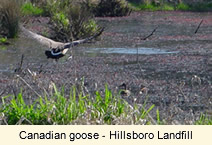 The staff also manages a number of ponds and natural areas adjacent to the landfill that provide valuable habitat just outside the Taulatin River floodplain, including a complex of three large ponds and a mature forest stand supporting a large heron rookery. In addition, several of the existing buffer corridors of vegetation that separate landfill facilities from adjacent properties provide additional habitat for local wildlife, particularly neo-tropical migratory birds.
Besides conducting five to ten tours on-site annually, the facility and its employees actively support the adjacent Jackson Bottom Wetland Preserve. Landfill staff members have served on the Jackson Bottom steering committee for several years, and since the 1980's the landfill has helped with the master planning efforts at the preserve, lending equipment, providing personnel for project tours or donating funding for restoration efforts.
Hoot Landfill, Fouke, Arkansas
Certified since 2009
The Hoot Landfill is a 215-acre closed landfill located in southwestern Arkansas near the Texas-Arkansas border. The dedicated eight-member wildlife team consists of both Waste Management employees and volunteers from local community organizations such as the Sulphur River Waterfowl Association, Boy Scout Troop 85, the Fouke Independent School District, and Arkansas Game and Fish. The team actively manages all 215 acres of the property for wildlife.
The Sulphur River Waterfowl Association manages the site in cooperation with WM with the goal of enhancing habitat for bird species. The team maintains artificial nesting structures for songbirds and waterfowl, including ten nest boxes for Eastern bluebirds, 32 nest boxes for wood ducks, and more than 35 nesting tubes for Canada geese. In 2010, an additional 20 raptor perches were installed on-site (for a total of 25 perches) in order to enhance habitat for birds of prey.
The team also conducts rotational mowing on the landfill to enhance cover resources for raptor prey species and other animals. On the capped landfill and around each of the site’s ponds and wetlands, the team maintains food plots for game species such as white-tailed deer, ducks and geese. The food plots, first established in 2005 by Sulphur River Waterfowl Association personnel, were planted to offset the impact that site operations might have on the site’s wildlife species.
The wildlife team hopes to add additional projects to its habitat management goals, such as planting a pollinator garden by the lake and conducting a controlled burn on-site with the help of Arkansas Game and Fish.
The Corporate Lands for Learning (CLL) program at Hoot Landfill was newly certified in 2011. The Education Advisory Committee (EAC) is composed of volunteers from Waste Management and representatives from the Sulphur River Waterfowl Association, school district, Arkansas Game and Fish and the Boy Scouts.
The EAC works with Fouke Independent School District and Texarkana School District. For the past five years, an annual three-day event called Outdoor School has worked with sixth-graders to involve the students in science, investigation and other disciplines. Students rotate through ten stations, including botany (plant identification), bird identification, a creek study (including macroinvertebrate sampling techniques), and nature sounds. These lessons correlate with the classroom curriculum, and teachers frequently perform follow-up activities, including essay writing about what the students learned on-site. Approximately100 students attend this fun program each year.
Another program that the EAC is committed to is providing internships for alternative education high school students. About 20 students work monthly at the site supporting events and doing infrastructure work (such as facilitating the outdoor school, preparing for the fishing derby, and rehabilitating the classroom). These activities are followed by class discussions and essay writing at school. For the past five years, this program has helped many students who otherwise would be in danger of dropping out of high school. To date, 16 students have received their diplomas thanks to this internship program.
The CLL program also began a new partnership with a Texarkana inner-city youth group. About 50 students aged from five to 18 are given the chance to experience nature through wildlife observations. Many of these students live in extremely urban environments and have not seen natural areas like the habitat at Hoot Landfill.
The EAC also works to help Boy and Girl Scouts earn their badges. In the spring of 2010, Boy Scouts built infrastructure (fire rings, handicap ramp) around the site and constructed and installed nest boxes to be used for the program’s habitat projects. Girl Scouts visited three times during the springs of 2010 and 2011 to do nature observation, species identification, a creek study and safety exercises.
The CLL program hosts annual events for the community as well. The fishing derby allows children to participate in competitive fishing events and learn how to identify each species of fish. The program also hosts a youth deer hunt, including discussions of wildlife population dynamics and hunting ethics. Participants learn about the biology and ecology of each game species too.
In the future, the EAC has plans to complete the nature trail and develop programming for it. Also, the EAC plans to host more overnight programming for scouts.
King George County Landfill, Fredericksburg, Virginia
Certified since 2009
The 685-acre King George County Landfill is located in a predominantly agricultural and residential area west of Fredericksburg, Virginia. Approximately 200 acres are actively maintained for wildlife, including grasslands, wetlands and ponds. Thirteen employees are involved in habitat enhancement projects on-site.
The landfill is a pollinator-friendly site with a variety of habitat opportunities. A wildflower meadow was planted with native grasses and wildflowers above the capped landfill to create habitat for a diversity of species. The meadow is frequently monitored by employees for evidence of wildlife. Two pollinator gardens provide bees, hummingbirds and butterflies with habitat. In addition, four new bee hives and queen bees were added to the site in 2011, further supporting the local pollinator population.
Brush piles have been created throughout the site. Brush piles provide habitat for smaller animals, which in turn are a source of prey for larger animals such as the frequently spotted bald eagles. The team has recently added dirt mounds around the brush piles to allow for easier monitoring of wildlife. Basking logs were added to the ponds on the site to provide the opportunity for turtles to bask in the sun. Waterfowl and other wildlife also use the logs for perching. In 2009, duck and bat boxes were installed at the site to enhance habitat for these species.
The King George County Landfill wildlife team is dedicated to working with the local community and providing educational opportunities. The team has collaborated with the local elementary school, Sealston Elementary. The school takes field trips to the site to learn about wildlife and recycling. There are future plans to work with local Boy Scout troops to erect bird boxes and raptor perches. The site has partnered with the local Audubon Society in an annual Christmas Bird Count to monitor the number of bald eagles and other birds found on the site.
Valleyfield – Closed Site, Montreal, Canada
The Poste de transbordement de Valleyfield program is located on 49.4 acres of the Petit-Canal-à-Salaberry-de-Valleyfield Nature Reserve southwest of Montreal in Canada, which was a former domestic waste landfill. The team’s objectives are to preserve the natural state of the site; ensure quality habitat for wildlife and plant communities, specifically by providing reptile shelters and increasing the wood duck population locally; ensure connectivity role with other forest areas adjacent to the site; ensure in perpetuity the legal tenure of the site as a conservation-site currently recognized by the province of Quebec.
The site has entered into a conservation agreement with the Minister of Sustainable Development, Environment and Climate Change for the site known as Petit-Canal-à-Salaberry-de-Valleyfield Nature Reserve. There is diverse birdlife and a significant botanical diversity. They wish to continue conservation efforts for this environmentally important site while continuing to acquire and enhance scientific knowledge of this permanently protected area.
There are six shelters for reptile species by stacking large rocks, since natural rock features for reptiles are non-existent within the nature reserve. Monitoring takes place every spring.
The team has installed 13 wood duck nest boxes and between 2015 and 2017, on average, more than 56% of the nest boxes have been used. They estimate that more than 25 ducks produce annually on the site of the nature reserve.
The ecotone site was created in 2016 to serve as a link between an arborescent massif to the north and a shrub massif to the south and increase habitat diversity and provide fruit trees for wildlife.
Kirby Canyon Recycling & Disposal Facility, Morgan Hill, California
Certified since 2002
The wildlife team at Kirby Canyon Recycling & Disposal Facility is committed to providing solid waste management services while proactively protecting and enhancing the serpentine soil grasslands and populations of endangered and threatened species present on-site. The property encompasses approximately 827 acres, with 600 acres devoted solely to habitat enhancement projects and scientific study. The ecosystem is one of the San Francisco Bay area's few remaining serpentine soil grasslands that support the federally listed bay checker-spot butterfly and rare plants such as jewel-flower. The site also supports the threatened California red-legged frog.
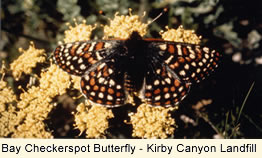 The Kirby Canyon Landfill Conservation Trust funds and oversees activities related to conservation of the bay checker-spot butterfly. The wildlife team fenced off 250 acres of prime butterfly habitat and placed grazing restrictions on the area to protect the plant community on which the butterfly depends for food, protection and reproduction. The team also initiated studies and experiments into methods to restore the final landfill slopes to serpentine grassland habitat. Employees began work on a Habitat Conservation Plan (HCP) for the entire site with assistance from the U.S. Fish and Wildlife Service. Completion of the HCP and accompanying Implementation Agreement will further commit employees to protecting the endangered and threatened species on site.
The team collaborates with a number of organizations, including the California Native Plant Society, Santa Clara Valley Audubon Society, Stanford University and Western Washington University. Local experts and university students help the team monitor habitats and conduct studies to test whether enhancement programs benefit their targeted species. The wildlife team and its partners annually monitor the bay checker-spot butterfly population, take inventories of plant species in the serpentine grassland, and study the effects of grazing and nutrient-cycling in the grassland. The team also monitors the California red-legged frog population, which uses a constructed wetland area on the site. Vegetation introduced to this area provides cover and egg attachment sites for frogs. Future plans include installation of an additional wetland area to provide habitat for rare plants and animals, as well as continuation of monitoring activities for the rare species that inhabit the site.
The facility's program was cited by the Wildlife Habitat Council as Rookie of the Year in 2002.
Laconia Transfer Station, Laconia, New Hampshire
Laconia Transfer Station, operated by Waste Management of New Hampshire, Inc. (a subsidiary of Waste Management) is located on 25 acres of land north of Manchester, NH. The facility contains two wet ponds with reeds and other wetlands plants. The entire site is surrounded by forest, but is comprised of landscaped areas, lawns, grassy areas, wetlands, and developed areas. The team strives to help restore eastern bluebird populations to the area by providing nest boxes to replace natural nesting cavities, which have become limited for this species due to habitat reduction and competition.
Ten nest boxes were installed in 2011 and hollowed out snags were preserved to provide nesting sites for the bluebirds. Grassy areas of the site are mowed to "lawn" length in places and left long in others to provide suitable forage areas for the birds at various times during the summer. No bluebirds were identified at the site prior to the installation of the nest boxes. Since the project inception, eastern bluebirds have frequented the site annually.
Lake County Recycling and Disposal Facility, Chesterland, Ohio
Certified since 2009
The Lake County RDF was an active landfill used for municipal and commercial waste from 1927 until 1993, when it was closed with a state of the art vegetated cap. The site covers 195 acres, all of which are devoted to enhancing wildlife habitat, increasing biodiversity and providing educational opportunities via partnerships with the Gates Mill Environmental Center and the Geauga Park District. The site has 106 acres of meadows, 86 acres of forest and a one-acre wetland. More than 11,000 feet of watercourses are present on-site, including five tributaries of Caves Creek and Caves Creek itself, which flows into the Chagrin River. The site is ideal for wildlife to flourish, creating excellent opportunities to observe deer, bobolinks, bluebirds, white-breasted nuthatches, green frogs, eastern newts, white-tailed deer and beavers.
The wildlife team is dedicated to building native habitat and enhancing the existing one. In May of 2009, the team sent soil samples to Penn State University for analysis before planting 135 native trees and shrubs, including American witch hazel, black chokeberry, cranberry bushes and gray dogwoods, in the “bowl” area of the site in an effort to create a transitional area that will further enhance biodiversity. Since 2008, the Lake County wildlife team has been actively managing the site for invasive phragmites and teasel.
In the summer of 2008, the team began a rotational mowing program on the site’s vegetated cap. The grassland was divided into three strips, with each strip being mowed once every three years to encourage growth. Also, the team decided to perform this mowing after the bobolink’s breeding and nesting season because of this species’ “concerned” status in Ohio. Twenty bluebird nest boxes were erected in the summer of 2011. Thus far, 18 of the nests have been occupied.
In 2009, the team constructed brush piles on the site’s forest-meadow edge, as well as snags on which birds of prey can perch. It has since observed chipmunks, meadow mice, black snakes and great horned owls using the brush piles for shelter and hunting. In the future, the wildlife team would like to establish bat boxes and add bee poles to its pollinator meadow.
Lake View Landfill, Erie, Pennsylvania
Certified since 2008
The Lake View Landfill covers 526 acres near the shore of Lake Erie. The wildlife team was joined by consultants from Beran Environmental Services, Inc. and volunteers from a number of community organizations, including the Collegiate Academy, Presque Isle Audubon Society and Lake Erie-Allegheny Earth Force, to help create a Habitat Management Area (HMA) south of the active landfill.
The HMA consists of 68 acres of created marshy emergent wetlands, woodlots and grasslands with established shrub communities. In addition, more than a mile of reconstructed stream channel runs through the HMA. Waste Management exceeded mitigation requirements by restoring a greater wetland area and more linear feet of stream than required, and by planting the HMA with 250 species of native upland and wetland plants. The site serves as a model for wetland mitigation, and state agencies conduct mitigation field trainings on-site.
The wildlife team installed two wood duck boxes by the wetland in 2005, and one of them was used by wood ducks the following year. In the fall of 2007, student volunteers helped the wildlife team build and install eight bluebird nest boxes; volunteers from another school installed 12 more in the spring of 2008 and marked their locations with a GPS unit.
Invasive purple loosestrife and common reed were identified in the wetlands. The wildlife team chemically treated these plants to stop their spread and maintain the wetlands' high plant diversity. These areas will be monitored closely for any re-growth of the invasive species.
One main goal of the program includes educating the community on responsible waste disposal practices through recycling and "green energy" programs. In addition, the site looks to educate the community on different habitats on-site and how they allow for a diversity of species. Since 2007, the facility has engaged more than 1,000 visitors in its programs, including students, scouts, universities, resource professionals, and government agencies.
Curricula introduced during Lake View’s programs use components of the habitat. Participants learn characteristics and the importance of wetlands, wetland design and construction, stream ecology, human demands on the environment in relation to resource protection, green initiatives, and sustainable practices. In addition, groups have learned about artificial nest structures, their significance and design. Following the presentation, participants assisted in site selection, installation and GPS mapping of these nesting structures.
Several colleges and universities have taken advantage of this outdoor learning laboratory as well. Students from Mercyhurst and Allegheny College, Penn State University, and Edinboro University have visited the site to explore waste disposal, methane collection, wetland ecology and geology. In addition, the Benedictine Sisters of Erie (Margarita Dangal, Pat Lup, Annette Marshall) were named Community Partner of the Year in 2010, in cooperation with Lake View Landfill.
Liberty Landfill, Monticello, Indiana
Certified since 2008
Liberty Landfill is a municipal solid waste landfill located in northern Indiana. The site spans 480 acres, 138 of which are devoted to wildlife habitat. The area includes ponds, a wetland, a wooded area, and a prairie environment. The site's six-person wildlife team began its habitat enhancement program in 1993 by simply allowing the site's fields to grow instead of keeping them mowed. Since then, the program has expanded to include extensive annual plantings, strong relationships with local conservation organizations, and community outreach efforts.
The work of Liberty Landfill's wildlife team benefits a broad range of species. The team works to improve habitat for the local wild turkey population; turkey habitat includes brush piles, a dusting area, managed snags and food plots. The team also enhanced the site for pollinators by planting wildflowers, and created a nesting habitat for ducks by installing duck boxes and planting winter wheat, going above and beyond the requirements of its compensatory wetland work.
In addition, the wildlife team recognizes the need to build strong relationships with conservation organizations and local groups. The team has partnered with local Boy Scouts, Ducks Unlimited, Pheasants Forever and other groups to create a habitat program whose impact extends beyond the landfill and into the community.
The site's uses the fields, forests and wetlands at the site as an outdoor classroom to teach wildlife conservation, habitat management, hunter safety courses and hunting as a tool for land management.
Partnering with the Nature Conservancy, Sportsmen Acting for the Environment, the Boy Scouts, the National Shooting Sports Federation and Pheasants Forever, Liberty Landfill exposes youth and adults to exemplary wildlife habitat management practices as well as hunter safety education. the facility has also helped to complete extensive development and habitata projects at Camp Buffalo, a Boy Scout camp adjacent to the facility.
Live Oak Landfill, Conley, Georgia
Wildlife at Work certified since 2010
Acres managed for wildlife: 184
Located in Conley, Georgia, the Live Oak landfill became the first synthetically lined landfill site in Georgia. Since the landfill’s closure in 2008, a wildlife team was formed to help restore, protect and enhance the biological diversity of native wildlife and vegetation on the property. The site consists of 412 acres, all of which are now managed for wildlife. Located near the Atlanta metropolitan area, one of the country’s fastest-growing regions, the landfill provides much-needed habitat for native species.
In February 2009, wildlife team members, with assistance from outside technical experts, met to develop a seeding plan for the landfill. Two plans were developed, including a wildflower plan and native warm-season perennial grass plan. In the spring of 2009, 40 acres of the landfill were seeded with a mixture of big bluestem, little bluestem, switchgrass and Indian grass. The meadow is maintained on a rotational mowing schedule to maximize its use by native species and is reseeded with native grasses when necessary.
In the spring of 2010, the team initiated an integrated avian management plan to include the installation of a purple martin house and 15 cedar bird houses. In 2011, two additional purple martin houses were erected on site. The team regularly monitors these structures. The site also houses two ponds, two of which were enhanced by the installation of basking logs placed in each. The logs provide habitat for aquatic life including reptiles such as turtles and bird species. The wildlife team plans to further improve the ponds by establishing rock piles and installing wood duck boxes.
Lockwood Regional Landfill, Sparks, Nevada
Certified since 2010
Lockwood Regional Landfill is located in Storey County, near the Truckee River in western Nevada, and has roughly 1,600 acres of available wildlife habitat. Within this acreage, the predominant habitat type is high desert, a type that can form in areas receiving less than eight inches of rain per year. Vegetation throughout the site is dominated by sagebrush species, with a few interspersed areas of singleleaf pinyon pine.
The main goal of the facility’s wildlife team is to enhance the environment for the benefit of endemic species and educate the surrounding communities about the native species in the region. To achieve this goal, the wildlife team built three raptor perches, each with its own brush pile. This enhanced habitat for raptors by providing shelter for prey species and a platform from which the raptors can hunt. While the wildlife team is exploring community partnerships, its members are also formalizing plans to construct a path and an educational kiosk to provide visitors and volunteers a user-friendly trail through the high desert as well as information about the wildlife habitat projects being managed on the property.
Maplewood Recycling and Waste Disposal Facility, Jetersville, Virginia
Certified since 2008
The Maplewood Recycling and Waste Disposal Facility is located in rural Amelia County area in central Virginia. Approximately half of the property’s 800 acres are available for wildlife. Five of the 15 employees participate in the habitat enhancement program. The wildlife team is committed to providing sustainable wildlife habitat enhancement for wildlife diversity, recreational opportunities for the community, and environmental education opportunities for students.
In 1994, mitigation required the construction of a 5.2-acre wetland. The management at the facility went above and beyond requirements by creating a total of 10 acres of wetland which provides habitat for heron, beavers, and muskrats. Employees also collect discarded Christmas trees from county residents every year. The trees are taken to a wildlife management area and placed in lakes for additional habitat structure.
In the fall of 2011, the wildlife team partnered with nine members of the Amelia Outdoor Adventure Club to construct and install eleven bat boxes. The boxes provide roosting cover and shelter for local bat species. The team located the boxes near the wetlands to ensure plenty of insects are available for the bats to eat.
The Wildlife Team conducts rotational mowing of the 65-acre grassland to create a variety of habitat areas while minimizing undesired woody species and other invasive plants. The meadow also serves as a release site for rehabilitated wildlife.
Meadowfill Landfill, Bridgeport, West Virginia
Certified since 2010
The Meadowfill Landfill is situated on 340 acres in Clarksburg, Harrison County, in north central West Virginia. The area was strip-mined in the past and currently contains a landfill permitted for municipal waste disposal. The property contains 16 acres of forest, 60 acres of fields, three sediment ponds and a stream.
The wildlife team has implemented a variety of projects on-site, including wildflower plantings, stream rehabilitation, bluebird boxes, raptor perches and grassland management. A stream on-site receives acid drainage from the closed coal mine and heavy bank erosion from flash storms. The team partnered with the local Salem School, MSES consultants, Mountain State University and WHC to plan and carry out a planting event along the stream. Bluebird boxes were built by local Boy Scout troops and have been installed around the property. Native flowers were planted near the facility’s entrance to beautify the property and provide a nectar source for native pollinators. The team is currently awaiting approval from the West Virginia Department of Environmental Protection to convert the grasses on the inactive, capped portion of the landfill to native warm-season grasses. This will provide a native food source for wildlife, cover for birds and small mammals, and a vital source of a rare native habitat for the area.
Menominee Landfill, Menominee, Michigan
Certified since 2009
The 1,440-acre Menominee Landfill is located in a rural area, surrounded by mixed conifer swamps as well as a few homes and farms. The site contains diverse habitat types including grasslands, forests, wetlands and ponds. Approximately 1,000 acres are actively managed for wildlife, including 45 acres of freshwater wetlands.
The wetland was created in 1997, and a vegetative buffer was planted around it to filter sediments and pollutants and control erosion. Upland native plantings around the wetland provide additional habitat for a variety of wildlife. An observation deck was constructed to provide an area for educational tours to observe the wildlife. The wildlife observation area has hosted school groups, scouts, bird watchers and other local groups. The area was named the “Elmwood Wildlife Observation Area” and a nature trail was established to further improve wildlife observation opportunities. The wildlife team monitors for invasive species in the wetland area and manages the spread of invasive buckthorn and phragmites.
The Chappee Rapids Audubon Society conducted a bird survey in 2009, and identified 96 species of birds on-site. The wildlife team installed songbird and wood duck nest boxes in 2009 to enhance existing habitat on the site for cavity-nesting bird species. Several snags were also created to provide additional habitat for cavity-nesting birds. The wildlife team monitors the nest boxes and snags to ensure that they will benefit wildlife for years to come.
In an effort to improve the fishing in the area and increase fish diversity, Menominee Landfill allows the Michigan Department of Natural Resources (MDNR) to raise walleye in a six-acre sedimentation pond. Although MDNR suspended rearing walleye in 2007 because of concerns about spreading the viral hemorrhagic septicemia (VHS) virus, the project was resumed in limited areas in 2010. More than one million walleyes have been reared at this pond and stocked in Michigan rivers and lakes.
Mesquite Creek Wildlife Habitat Area/Mesquite Creek Landfill, New Braunfels, Texas
Certified since 2010
The Mesquite Creek Wildlife Habitat Area (MCWHA) lies adjacent to Waste Management’s Mesquite Creek Landfill. The land had been used for cattle grazing and was slated to be a housing subdivision until Waste Management purchased the property and set aside 275 acres for wildlife habitat development. The site’s rolling hills and valleys foster diverse habitats, including grasslands, small forested areas, brushy areas and seasonal floodplains. Mesquite Creek runs into the property from the south and feeds a 26-acre man-made lake. Five small man-made ponds were once used for cattle tanks. The wildlife team includes WM employees, community volunteers and conservation partners from local schools, community and environmental groups.
As the wildlife team developed a pollinator garden, it left about 15 species of naturally occurring native plants in place. Members left native trees and shrubs to serve as established cover for the pollinator species that the project hoped to attract. The team carefully researched and developed a list of more than 70 native plant species that provide habitat for multiple life stages of bees, butterflies and hummingbirds. The majority of the species were obtained through local plant sales. Volunteers enriched the clay soil with local municipal compost, and planted the garden in May of 2009. When monitoring officially began at the end of June, pollinator species were already using the habitat.
The wildlife team began working on Domino’s Turtle Pond in January of 2009. During the planning phase, the team researched and analyzed issues such as prior land use and its impact on water quality as well as pond ecosystem functions. The pond was originally a cattle tank, but the team eradicated cattails and re-shaped the shoreline to provide shallow ledges that increase the pond’s value to various species. The team planted a diverse mix of native trees, shoreline plants and aquatic plants, and seeded various wildflowers and grasses around the pond. Basking logs and a floating island provide additional habitat. A solar-powered aeration system and cold-water microbes and enzymes were introduced to improve water quality. Team members regularly monitor the plantings for survival and the pond for wildlife use, and a volunteer conducted a turtle study of the pond.
The MCWHA Invasive Species Task Force targets non-native invasive species such as Chinese tallow, Johnson grass and Japanese honeysuckle. Volunteers were trained to walk transects across the property to survey for non-native invasive plants. They use a GIS tracking system to map the location and size of affected areas. The team will identify appropriate control methods and select native species for planting to enhance habitat for wildlife.
Education and outreach are important components of the facility’s program, and the wildlife team has numerous partners. Volunteers constructed nature trails with the help of an aspiring Eagle Scout. The team conducted multiple detailed plant inventories in partnership with the Nature Conservancy, and Comal County Birders conducted a 12-month bird inventory. The wildlife team also opened the MCWHA to RavenStar Outdoor Education for use as an outdoor classroom.
Middle Peninsula Landfill and Recycling Facility, Glenns, Virginia
Certified since 2011
Middle Peninsula Landfill & Recycling Facility covers 592 acres, of which more than 30 acres are managed for wildlife habitat. The site’s habitat is composed of wetlands, woodlands, open grasslands and ponds. In an effort to conserve wood duck populations, which have decreased due to hunting and wetland habitat destruction, the wildlife team installed four wood duck boxes to provide habitat. Although the team didn’t find any eggs, the boxes have already been moved to a new location near the ponds. Monitoring will continue.
Another project the wildlife team worked on is a wildflower meadow that was planted in 2009 on 25 acres of grassland to improve stabilization of the soil cover. The wildflower meadow will benefit pollinators and will also provide cover for small game birds. The meadow is monitored on a monthly basis by a team of three employees.
Middle Peninsula Landfill is involved with many local schools and Boy Scouts to promote environmental education and awareness by providing educational tours and talks on the site. It also provides funding and resources for environmental events in its community, such as Clean the Bay Day, Gloucester Clean up Day, and VIMS crab pot recycling.
Mill Seat Landfill, Bergen, New York
Certified since 2004
The 385-acre Mill Seat Landfill is located in a rural area of Monroe County, New York. The site includes a variety of habitat types, including upland deciduous forest, succession upland shrub, deciduous swamp and shallow marshes. A total of 225 acres of the site are actively managed for wildlife.
The wildlife team established a nest box program for a variety of species, including bluebirds, tree swallows, wood ducks, screech owls and American kestrels. Bat boxes were created to provide roosting habitat for native bats. The program was expanded in 2008 with the installation of 30 additional bluebird nest boxes, which were constructed by students from the Churchville-Chili High School. Employees and local volunteers carefully monitor the bluebird nest boxes to ensure their continued success.
The wildlife team established a rotational mowing program to ensure that a variety of habitats are available at all times. Brush piles throughout the site provide additional habitat for a variety of small animals. The numerous habitats on the site provide an opportunity for a variety of rehabilitated wildlife to be released on the site. A partnership with the Black Creek Wildlife Station releases rehabilitated animals on the site.
The wildlife team also works to control the invasive Phragmities. Controlling this invasive species will allow native plants with greater value to wildlife to become established. To promote native planting, the wildlife team established a community nursery and pollinator garden on the site. The nursery provides native flowers, trees and shrubs that can be used for community greening programs, and the garden provides food and habitat for pollinator species.
In 2010, the wildlife team implemented two new projects: a nature trail and a pond remediation project. A local Eagle Scout proposed a nature trail be established on the property so the team worked with him choose a location and clear a trail path. Local scouts monitor and maintain the path. A pond on the site was becoming overridden with geese feces, so the team consulted with a local college student to implement a plan to restore the water quality. They are working to deter geese by creating an uneven shoreline, planting native tall grasses and flowers along the pond perimeter, and by installing floating islands and rock piles to enhance habitat for native species.
Mobile Bay Environmental Center, Mt. Vernon, Alabama
Certified since 2008
The Chastang Landfill/Mobile Bay Environmental Center is about 467 acres in size, with six acres currently managed for wildlife habitat, although wildlife such as deer and turkey use much of the site. The site is located north of Mobile and is largely open grassy areas and disturbed construction areas. The borders of the site are generally secondary forest. Four sedimentation ponds are located on the property, and one pond was created specifically for the benefit of wildlife.
The wildlife team has put considerable effort into creating artificial habitat to supplement the natural habitat on the site. This has included the installation of five bluebird nest boxes, four purple martin gourd condos, one purple martin nest house and two wood duck boxes. The boxes are currently maintained but a monitoring program has not been established.
The wildlife team understands the importance of aquatic habitats and wants to protect and enhance these areas on the site. The team arranged for the natural wetlands on the site to be delineated by the U.S. Army Corps of Engineers, and then had signs installed around the wetland highlighting the area to employees and visitors. In September 2007 the wildlife team removed invasive species from the wetland perimeter area. Also, the team designed and constructed a pond on the site, taking advantage of a natural spring for the water source. The pond was created with an uneven bottom to enhance the underwater habitat. Also, two wood duck boxes were established on the edges of the pond. In July, the pond was stocked with 250 bream and 250 catfish, and the wildlife team plans to continue enhancing this resource.
The wildlife team plans to plant at least one wildflower meadow this fall and will plant a pollinator garden near the entrance. The pollinator garden will provide visitors and community members a highly visible example of Chastang Landfill’s habitat projects.
Model City Facility, Model City, New York
Certified since 2007
Model City is a commercial hazardous waste treatment, storage and disposal facility that encompasses 750 acres. Approximately 400 acres of the site are composed of wetlands, forests and grasslands. Wildlife enhancement plans were initially designed around regulatory issues related to the landfill’s contents.
The wildlife team constructed and placed four bat boxes in the spring of 2008. The team consulted plans from the Organization for Bat Conservation prior to implementing the project. The boxes have been monitored regularly; currently, no bats are occupying the boxes, but the wildlife team intends to wait another year before relocating them.
The wildlife team researched appropriate pollinator-attracting species that would tolerate a full-sun placement and planted a pollinator garden in the spring of 2009. The team reached out to Our Lady of Peace Nursing Home in 2010 and also planted a pollinator garden there. The plan is to expand this project every year to other places in the community. The team is working with Ransomville Free Library to plant a pollinator garden at the library in 2011. The team hopes to educate the local community on the importance of pollinators.
A wild turkey management project was started by the wildlife team in 2010. The team consulted with the Wild Turkey Federation on how to best provide additional habitat for the wild turkeys occasionally seen at the landfill. Since the creation of the project, the presence of turkeys on-site has increased.
Mountain View Reclamation, Greencastle, Pennsylvania
Certified since 2007
The Mountain View Reclamation property covers approximately 750 acres in south central Pennsylvania, of which 400 acres are used for wildlife habitat management. Historic uses include farming, the operation of an apple orchard and shale mining. The site’s habitat is composed of wetlands, woodlands and open grasslands. In addition, ten ponds and three streams provide habitat for different types of waterfowl, amphibians and fish. Approximately 97 acres of property are restricted to Pheasants Forever; nearly 50 acres of warm-season grasses have been planted, and cool-season grasses and woodlands have been maintained to provide habitat for pheasants.
Local scouts and Venture Crew members helped to build and install nest boxes for bluebirds, kestrels, mallards and wood ducks. Four bat roosting boxes were also constructed and installed. Employees and scouts maintain and monitor the nest boxes. Employees also placed two barn owl nest boxes following recommendations from the Pennsylvania Game Commission for this species of growing concern. Although nesting has not been successful, some bluebirds have been seen on-site and wood duck boxes are still in place. The wildlife team members also planted a quarter-acre pollinator garden and created brush piles.
In an effort to promote environmental awareness, the Mountain View Reclamation site involves students and community members in landfill tours to teach the importance of environmental protection, earth and its resources. In addition, various universities and colleges conduct environmental research projects and stream water studies on-site. The team also sponsors and participates in Earth Day events at local schools each spring by providing outdoor environmental activities for students.
Northwestern Landfill, Parkersburg, West Virginia
Certified since 2009
The Northwestern Landfill occupies 345 acres, of which 101 are managed for wildlife. Many habitats are present on-site, including woodland, grassland, and natural and manmade wetlands and ponds.
Students from a local vocational-technical school built 25 bluebird nest boxes, which were later installed on the landfill property. Local Cub Scouts visit the site to clean out the nest boxes; their efforts were recognized at Youth Day in North Bend State Park.
The team planted a 1/2-acre grass plot with native seeds, including anise hyssop, aster, golden star, goldstrum rudbeckia, white wildflower, snowflake phlox and zagreb coreopsis. The plot provides a source of food and cover for grassland birds. The plantings also minimize soil erosion and improve surface water quality.
Oak Ridge RDF, Logansport, Indiana
Certified since 2009
The Oak Ridge RDF site is located in northwest Indiana near the town of Logansport. Located in a rural area, the site’s surrounding properties are primarily agricultural. Of the site’s 396 acres, approximately 175 are available for wildlife habitat enhancement projects, with 133 of those acres actively managed for wildlife projects. The site is composed of a variety of habitats, including grasslands, native tallgrass prairie, upland mixed forest, emergent wetland, riparian habitat and open water. In addition to the landfill, the site contains a recycling center and a waste-to-energy generating facility.
The Oak Ridge wildlife team is involved in a number of projects to increase biodiversity on its site. These projects include prairie and grassland restoration, wetland creation and restoration, reforestation efforts, bird nesting boxes, recreational trails and an outdoor classroom for public outreach.
The wildlife team planted a mix of switchgrass and native wildflowers, such as purple coneflower, blazingstar and butterfly weed. The team partnered with Pheasants Forever to release pheasants in 2007. Forty-six pheasants were counted using the field in 2009. In 2011, a portion of a trail near the restored wetlands was constructed, with plans to expand the trail in the near future. Another recent effort was the planting of native species to create a pollinator garden around the office buildings at the site. This was done to attract important pollinators, such as bees and butterflies, to utilize the garden and increase biodiversity.
The Oak Ridge RDF wildlife team takes great pride in its conservation endeavors. The team has plans for numerous future projects, including the expansion of existing projects as well as the creation of new ones. One of those exciting new projects will be the addition of a wildlife and nature center at the site within the next two years. Another proposed project is the rerouting of a stream and improvements to the riparian corridor.
Okeechobee Landfill, Okeechobee, Florida
Certified since 2003
The Okeechobee Landfill, a 4,100-acre facility in rural Florida, continues to provide habitat for a variety of sensitive species, including the sandhill crane, gopher tortoise, eastern indigo snake and American alligator. The employee wildlife team remains dedicated to enhancing and maintaining wildlife habitat and creating partnerships with the community.
More than 2,000 acres of the site are managed for wildlife and consist of restored marsh and forested wetland habitat. These habitat communities provide employees and visitors with the unique opportunity to view the endangered Florida sandhill crane. Maintenance and monitoring of the 180-acre created wetland known as the Posey Creation Area and the Southwest Swamp for the cranes is a primary goal for the wildlife team. The team recently created 30 acres of new wetlands and enhanced 11 acres of wetlands as part of the North Borrow Mitigation Project. The wildlife team conducts biannual monitoring of areas that the cranes occupy, as well as their access to food, water and shelter. The team also allows low-density cattle grazing to enable young cranes to move and hunt in the grasses more easily. Native plantings of bald cypress, slash pine, and pickerelweed enhance these areas for the cranes. During the North Borrow Mitigation Project invasive plants were controlled to allow the establishment of native species. 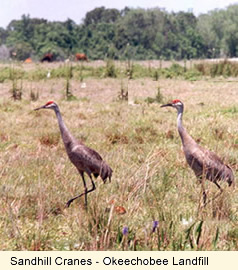
The wildlife team also maintains and enhances habitat for a number of species that are common on the site, including wild turkey, deer, wood ducks, gopher tortoise and a variety of birds. To provide ideal habitat for wild turkeys, the wildlife team leaves dead trees and brush piles to provide snags for roosting and cover, and coordinates a rotational mowing schedule. The wildlife team follows all regulations concerning gopher tortoises and takes extra effort to provide ideal habitat for the tortoises. A berm was constructed at the edge of the landfill to protect the tortoises from entering the active area. As stable populations are noted on the site, monitoring and enhancement will continue to ensure the success of the populations.
In 2006, Okeechobee High School’s Environmental Science Club built six wood duck boxes with the help of the wildlife team. The team installed the wood duck boxes in November 2006. However, after discussions with an environmental consultant, the wood ducks boxes were relocated in 2007. The wildlife team will continue to monitor and maintain the boxes, checking them frequently and cleaning them out when needed.
In addition to habitat enhancement projects, the Okeechobee Landfill also hosts 4-H campers to teach them about environmental conservation. The wildlife team is also working with Boy Scout Troop #964 to allow the scouts to complete the Fish and Wildlife Management Badge on the site.
Orchard Ridge Recycling and Disposal Facility, Menominee Falls, Wisconsin
Certified since 2010
The Orchard Ridge Recycling and Disposal Facility lies 13 miles northwest of Milwaukee and serves five counties in southeastern Wisconsin. The facility has operated since 1974 and consists of a combined area of 720 acres. The surrounding area is suburban and the adjacent properties are a mix of residential, farmland and commercial lands.
In 2009, ten employees formed a wildlife team and partnered with EC3 Environmental Consulting, Pheasants Forever and the Bluebird Restoration Association of Wisconsin to form a management plan for 18 contiguous acres of wetlands, riparian and prairie habitats. The installation of 13 wood duck boxes and 28 bluebird boxes was quickly undertaken and close records are kept of the boxes’ inhabitants. The bird boxes have been very successful and the wildlife team broadened its goals by beginning a prairie restoration and invasive plant management effort. With the help of volunteers from Pheasants Forever, Cedarburg High School and Dr. Kent Hall, the wildlife team made extensive efforts to eradicate non-native/invasive plant species and to re-seed native species in their place. Habitat enhancements were also made to a centrally located four-acre pond, with shoreline improvements and the creation of submerged refugia.
Phoenix Resources, Wellsboro, Pennsylvania
Certified since 2010
The Phoenix Resources facility encompasses 1,945 acres in northern Pennsylvania near the town of Wellsboro. The Wildlife Management Team actively manages 1,879 acres of the property as wildlife habitat. Habitats occurring on site include grasslands, wetlands, streams, and woodlands. Habitat occurring on site include grasslands, wetlands, streams and woodlands. Beavers also created and continue to maintain another pond near the wetlands. Surrounding areas are also relatively undeveloped; the facility is adjacent to a 2,500-acre property operated by a private forestry company and 4,150 acres of forested state land managed by the Pennsylvania Game Commission. All eight of the site’s employees participate as members of the wildlife team, which also includes the chairman of the local watershed association, a local biology teacher, a Boy Scout troop leader and employees involved in Wildlife at Work programs at other Pennsylvania Waste Management facilities.
Employees and local groups help to keep the site’s species inventory updated. Wildlife team members are provided with field guides to identify species observed on site, and record their observations on data sheets created by the team. Local groups also assist the team with spring and fall bird surveys. For example, a local Girl Scout troop participated in the National Audubon Society’s Great Backyard Bird Count on the property, and then submitted their findings to the Count’s nation-wide database.
Waste Management created three mitigation wetlands on the property in 2008. The mitigation team planted native plants around the wetlands. The wildlife team then took this project above and beyond requirements by adding wildlife habitat enhancements to all three ponds, including brush piles and basking logs that provide habitat for reptiles, amphibians and birds. As the new wetlands continue to mature the wildlife diversity continues to increase; employees have recently observed salamanders, young water snakes and a number of species of tadpoles in the wetlands.
Historical coal mining on the Phoenix Resources property left a significant acid mine drainage on nearby Babb Creek. Waste Management provides ongoing support of a local water treatment plant that helps reduce the effects of acid mine drainage on the creek. Sensitive species such as mayflies, minnows, newts and trout have returned to the creek, indicating an improvement in water quality and attracting sportsmen and outdoor enthusiasts. The wildlife team also recently constructed a passive acid mine drainage treatment wetland, which collects water from an outfall on the property and treats it as it enters Rock Run, a tributary of Babb Creek.
Aware that populations of important pollinators are under stress or declining, the wildlife team developed the three large gardens near the landfill’s entrance and offices as one of its habitat projects. The team added to the black-eyed Susans and purple coneflowers already part the landscaping by planting pollinator-friendly species, including bee balm and Joe-Pye weed.
In 2008, employees initiated a nesting project by installing nest boxes on site. Additional boxes were installed in the spring of 2010. The boxes provide nesting habitat for songbirds such as eastern bluebirds and tree swallows, as well as wood ducks. The wildlife team partnered with several local groups, including the Babb Creek Watershed Association and Cub Scout Pack 2046, to design, construct, and install the nest boxes.
Pine Bluff Landfill, Ballground, Georgia
Certified since 2009
The Pine Bluff Landfill is located in northwestern Georgia, in Cherokee County. The property now encompasses more than 1,100 acres of mixed acreage and provides the perfect setting for game species management and the preservation of natural wildlife habitats. These habitat areas are predominantly grassland, bordered by shortleaf and loblolly pine, mature hardwood and snags. Two creeks located on-site provide a natural water source for many of the native mammals found on the property, including coyote, beaver, wood ducks, mallards, wild turkeys, red foxes and white-tailed deer.
Since 1996, the site has hosted a game species management program for Eastern wild turkey and white-tailed deer on portions of the site not being used for waste disposal. The program is managed by ten wildlife team members, under the direction of retired game warden and former Georgia Department of Natural Resources Conservation Corporal David Phillips.
Both white-tailed deer and wild turkey frequent the mature hardwood and mixed forest habitat areas of the property, as they provide roosting, food, water and cover. Turkey broods in particular require habitat with abundant, moderately dense herbaceous ground cover and brushy areas nearby for cover. These types of natural habitats also support invertebrate populations, which are one of the main food sources for juvenile turkeys. The ultimate program goal is to couple the current game management program with habitat enhancements to ensure that all habitat components are provided in a sustainable manner.
The site also manages several invasive species—thistle, trumpet vine and kudzu—by rotary cutting, herbicide treatment and hand weeding. Future plans include the planting of a meadow with native grasses and wildflowers.
Pine Tree Acres, Inc., Lenox, Michigan
Certified since 2010
Pine Tree Acres consists of more than 450 acres of which just over 100 acres are managed wildlife habitat through the Wildlife Habitat Council Wildlife at Work certification program. The Kirkham Drain and several of its tributaries traverse the property. Wood duck, blue heron, bald eagle, American kestrel and green leopard spotted frog have been observed at the site by employees and noted in the wildlife monitoring journal.
The wildlife management team members consist of employee volunteers, local community members including scouting troops, representatives from the Michigan Duck Hunters Association, Lenox Township, Huron Point Sportsmen’s Association, and Clinton River Watershed Council. Pine Tree Acres Landfill partners with Macomb Community College (MCC) providing education to students about solid waste management, land use, landfill design and construction and also collaborated with MCC on the curriculum for an Alternative/Renewable Energy class. In 2008, MCC students also helped install a pollinator garden, which featured a variety of native plants supplied by the local Conservation District. The wildlife management team promotes pollinator populations through a WM employee and wildlife team member who is a hobbyist beekeeper and maintains beehives on site. The wildlife team also provides nesting habitat for wood ducks, cavity nesting songbirds and bats, has mapped turtle sittings for university studies and keeps ongoing species inventories and journals of wildlife observations.
Pine Tree Acres provides educational experiences for over 1,000 individuals per year through on-site and off-site presentations. As a well-known educational tour facility, the site provides the general public with conservation education which highlight ongoing wildlife habitat management practices.
Pioneer Rock Landfill, Brown City, Michigan
Certified since: 2011
The wildlife team at Waste Management’s Pioneer Rock Landfill actively manages almost 75 acres of prairie, two acres of wetlands, and three acres of woodlands. The habitat is surrounded by agricultural land, rural residential development, and two sand and gravel mining operations. The three man-made ponds are water sources for the various wildlife that can be observed on-site, like white-tailed deer, skunks, coyotes and leopard frogs. The site also provides a home for pheasants, wild turkeys, killdeer and more.
Since 2009, the team has enhanced the grassland areas by planting native seed mixes, including sand coreopsis, coneflowers, wild lupine, wild bergamot, big bluestem and little bluestem. Almost 50 native trees and shrubs were also planted in 2009, such as silver maple, shagbark hickory, sugar maple, black walnut, elderberry and grey dogwood. An additional 45 shrubs were planted on-site in 2010, and 30 more trees were added to the property in 2011.
The treatment of autumn olive, an invasive species, is an ongoing project for the wildlife team. Progress has been made by using the cut-stump treatment and spraying the stumps with herbicide. The cut autumn olive is used to create brush piles on-site to be used as cover for small mammals and reptiles. National Resources Conservation Service guidelines are followed to provide maximum benefit to wildlife.
In the future, the wildlife team has plans to continue enhancing the habitat at Pioneer Rock Landfill by planting one acre of native prairie seeds. The team also plans to maintain the grassland area through rotational mowing and continue the removal of the invasive autumn olive.
Prairie Hill Recycling and Disposal Facility, Morrison, IL
Certified since 2008
The Prairie Hill RDF occupies 423 acres and is located in Whiteside County in northwest Illinois. The site was purchased by Waste Management in 1992. As part of the initial licensing process, site manager Mike Wiersema and the site development team developed a closure plan. The closure plan envisioned the site as a community resource with publically accessible bike trails, a nature trail with interpretative signage and learning stations and perhaps a full-blown nature center. In the interim, whenever possible, the site is managed in accordance with this vision.
In 1995, the company decided to convert some unused land around the site's entranceway into a restored natural prairie. Working with the Whiteside County Soil Conservation and Natural Area Guardians, a prairie was established with native grasses and locally-collected native prairie wildflower seed. The seed was collected by the WCSC, NAGs, at the Sauk Valley Community College prairie. A management plan was developed and after three growing years of mowing, general maintenance -- and patience -- the prairie finally was established, not only to the site's enjoyment, but also that of drivers-by and the local pheasant and northern bobwhite quail populations. The prairie is maintained through scheduled burns in cooperation with the soil conservation office and control of invasive species by occasional mowing and targeted applications of herbicide.
In accordance with the vision for the site, educational opportunities are being pursued. For example, every year from August through October the soil conservation office in conjunction with NAGs arrive to harvest seeds which are sold as a fundraising event for their group. Future plans include enlisting local school children in creating a demonstration garden with ID tags to help site employees and visitors become familiar with prairie plants.
S&S Landfill, Clarksburg, West Virginia
Certified since 2011
The S&S Landfill lies on the Western Allegheny Plateau in Harrison County, West Virginia. The five-member wildlife team carries out the mission to enhance the diversity of wildlife habitat at the site while creating environmental educational opportunities for the public. The key initiatives of S&S Landfill’s Wildlife at Work program include the installation and monitoring of bluebird and wood duck boxes, rotational mowing and wildflower plantings.
The wildlife team obtained 14 bluebird boxes built by students from a local vocational school. The team installed them in the early spring of 2009. Employees monitor the nest boxes to determine that they are successful in attracting bluebirds and not invasive species. The team recently installed wood duck nest boxes, also constructed by vocational students. Employees and a contractor added predator guards to protect future residents of the boxes.
Site managers requested and received approval from the West Virginia Department of Environmental Protection to implement rotational mowing on five acres of the landfill cap. By mowing parts of the landfill cap less frequently, the wildlife team provides grassy habitat for animals found on-site, such as the American goldfinch.
The team planted a northeastern wildflower seed mix with the help of the local 4-H Club. The plantings were intended to provide habitat for pollinators, and include pollinator-friendly species such as blanketflower, prairie coneflower and lupine. To provide nesting habitat for native bees, the team installed bee poles by the wildflower meadow.
Saint-Nicéphore Landfill, Quebec
Certified since 2006
The Saint-Nicéphore Landfill is located in the southeastern portion of Quebec, approximately 100 km southeast of Montreal. The 773-acre property is bordered on the east by the St. Francois River consists mainly of second-growth forest. Wildlife habitat enhancement, employee participation, and public outreach are the primary objectives of the sites Wildlife at WorkSM program.
The St-Nicéphore landfill is located in the sugar maple-bitternut hickory domain which shelters more than half of the flora and nearly seventy percent of the fauna of Quebec, in addition to about half of the threatened or vulnerable species of the province. Since the region is under development, the wildlife team chose to initiate a habitat enhancement program by replanting bare areas on site to provide additional habitat and increase biodiversity. Close to ten thousand trees were planted on site covering an area of 3.75 hectares. Exclusively native species including white spruce, jack pine and sugar maple were chosen for the planting as they all offer benefits for wildlife.
The health of the St. Francois River is one of the main environmental concerns in the region and forms the basis for the sites wildlife habitat management plan. The Paul-Boisvert Creek, which runs through the site, was thoroughly inventoried in 2004 and the results showed the potential for enhancement for wildlife. The creek is to be part of a voluntary restoration effort in partnership with the local high school science group starting in 2006.
Sainte-Sophie Landfill, Quebec
Certified since 2006
The Sainte-Sophie Landfill consists of 736 acres approximately 50 kilometers north of Montreal, Quebec. The property is set within a region characterized by agricultural activities. The immediate surroundings of the Sainte-Sophie Landfill have remained mainly as forested land, making the site a good location for wildlife habitat enhancement potential. The property is covered with hardwood and evergreen forests, wetlands and open lands. The main body of water on site is the stream "Ruisseau aux Castors."
The wildlife team began a raptor management program with the construction of brush piles in the spring of 2010. The wildlife team also erected raptor perches in open areas of the site which these birds use for hunting. They chose sites within 75 feet of small shrubs or other vegetative cover which harbor the raptors' prey.
The wildlife team decided to restore the open lands by designating a half-acre area as a no-mow zone, installing 560 trees including native white spruce to increase forest cover on the property. To gauge the success of the plantings, the wildlife team installed sand traps in the reforestation areas to catch animal tracks to indicating use. They plan to compare wildlife use before and after the plantings. The wildlife team also inventories the no-mow zone area to determine the abundance of native and non-native plants and plans to plant additional native species in this area to further enhance the site for indigenous wildlife.
Many visitors tour the facility, including primary school students and university student, and each year employees host an open house. The Sainte-Sophie Landfill also collaborates with the community to maintain horse trails and stables on site for use by the local horseback riding club.
Saginaw Valley Landfill, Saginaw, Michigan
Waste Management Closed Sites Management Group, Saginaw Valley Landfill, encompasses 84 acres near Saginaw, Michigan. The Saginaw Valley Landfill Program team manages a variety of activities on the property to benefit wildlife. Projects managed for wildlife enhancement at Saginaw Valley Landfill include: Pollinator Garden and Native Forbs; White Tail Deer and other Mammals; Invasive Species Control; Native and Prairie Grasses and Storm Water Pond.
The Pollinator Garden and Native Forbs project consists of a 1-acre native grass area that contains multiple blooming forbs that are native to Michigan and small areas with rocks for basking. The project was started in May, 2016. Employees monitor and maintain the pollinator garden, future improvements are based on observations of plants that are successful in the garden. The use of pesticides has been eliminated on the site.
The objective of the White Tail Deer and other Mammals project is to provide improved habitat for White Tail Deer and other animal species on the property. Targeted species are Cotton Tail Rabbit and White Tail Deer. Fruit trees were planted as a source of additional food for the deer population, and native grasses and spruce and fir trees were added to allow for shelter and bedding/birthing areas. Brush piles are provided as habitat for rabbits, rodents and other mammals.
The Invasive Species Control project utilizes an Early Detection/Rapid Response plan to control invasive species. The Saginaw Cooperative Invasive Species Management Area sprays invasive species every fall. If new areas are found they are sprayed in the fall with the existing areas. The techniques that are used to manage the invasive species are those outlined in MSU Extension’s “Field Guide to Invasive Plants in Michigan’s Natural Communities”.
The objective of the Native and Prairie Grasses project is to provide nesting, breeding and feeding habitat for prairie birds and a source of pollen for pollinators. The Native and Prairie Grasses project encompasses seven (7) acres which is made up of two separate native grass areas consisting of an area that is one (1) acre, and another that is six (6) acres. Both of the areas have been treated and mowed to control thistle and other non-native plants. Employees inspect the areas and mow them as needed.
The Storm Water Pond project consists of one (1) acre of open water and its objective is to provide a clean safe source of water for mammals, birds and pollinators. Activities that are taking place to manage the storm water pond habitat include cleaning the site ditches that direct storm water to the pond of sediment, allowing dead trees to fall into the pond to provide habitat, and the treatment and removal of invasive species.
SCA Independent Landfill, Michigan
Certified since 2008
Waste Management's SCA Independent Landfill and adjacent wetlands complex located in Sullivan Township, east of Muskegon, show that it is possible to restore an area to a high quality after use by industry. The 40 acre SCA Independent Landfill operated from 1968 to 1986. An adjacent 30 acre sand borrow area was operated from 1997 until 2004. After the closure of the landfill, a mining permit was acquired to develop the adjacent sand borrow area into a wetland/upland complex for habitat restoration. Including undisturbed buffer areas, the total site area is 202 acres of wetland/upland complex that is a haven for wildlife, including the state of Michigan special concern species sand grass (Triplasis purpurea).
The created wetland shows a natural groundwater-fed hydrology that has lead to a vegetative community characteristic of Coastal Plain Marsh, a rare natural community in Michigan. Because of the care the project partners took in designing the wetland, few species needed to be planted - a diverse mix of mainly native species colonized the area directly from the existing seed bank. Additionally, Waste Management planted about 6 acres of disturbed upland with a prairie mix that should both stabilize the exposed area as well as outcompete with the invasive species that occur in the upland areas. Waste Management also planted a variety of shrubs and native trees to diversify the available vegetative communities and provide additional habitat.
The main goal of the site with regard to habitat is to preserve the high quality habitat that has been created through the wetland restoration project. The primary threat to this vegetative community is an array of invasive species that are present in adjacent areas. Biological, mechanical, and chemical controls will be used to control invasives and preserve the high habitat values of this successful wetland restoration project. Prescribed fire will also be used both to control invasives as well as manage the upland areas planted with native prairie species.
Sullivan Township has expressed interest in using the area for education programs in the future, which would be a wonderful way to use this property for the benefit of the entire community. Already, there has been a community planting day, organized by Pheasants Forever of Muskegon County where 700 bare-root seedlings were planted by the local Ravena High School and Future Farmers of America members.
S.C. Holdings, Wilsonville Facility, Wilsonville, Illinois
Certified since 2008
The Wilsonville facility is a 564-acre closed landfill located approximately 50 miles northeast of St. Louis, Missouri which has 135 acres managed for wildlife habitat. The property consists of cropland, grassland, forest and two ponds. The West Fork of the Cahokia Creek runs through the western portion of the site.
The Wildlife at Work program consists of habitat enhancement efforts which began in May 2008 with the placement of underwater brush piles and basking logs in the site’s ponds. Since then, the site has controlled invasive Phragmites and rotationally mowed the site’s grasslands. The WM wildlife team and a group of dedicated volunteers conduct extensive bird surveys on a weekly basis to document avian diversity on the property. Future activities will include planting native vegetation around the ponds and restoring an area of oak savanna.
Seymour Road Landfill, Montrose, Michigan
Certified since 2010
The Seymour Road Landfill is a former municipal waste facility, now closed, along the Flint River in southern Michigan. The sites consists of roughly 98 acres of available wildlife habitat under management. The site includes prairie/grassland, riparian woodlands, and three ponds, including a seven-acre pond that provides stop-over habitat for migrating birds and occasional fishing for bald eagles.
The wildlife team planted native shrubs and trees to enhance the 10-acre wooded floodplain habitat along the river. The team also planted native prairie grasses and wildflowers on the capped landfill; the grassland will be maintained by rotational mowing to provide a variety of cover types. To make the grassland even more welcoming to wildlife, the team actively controls invasive species with cutting and herbicide use. They have even used some of the invasive autumn olive cuttings to construct built brush piles to shelter small mammals.
The wildlife team continues to enhance wildlife habitat on site by planting trees, including native white pine, and installing nesting boxes on site. In May of 2012, the wildlife team also installed five bluebird and three barn swallow nest boxes. Since installation, a pair of bluebirds was spotted nesting in one of the boxes.
Simi Valley Landfill, California
Certified since 2007
The Simi Valley Landfill and Recycling Center's Corporate Lands for Learning (CLL) program achieved certification in 2010. The program provides an outdoor environmental education experience in which students, scouting groups and community members can learn about the importance of pollinator habitat conservation and explore native plant communities. Visitors can hike a nature trail, which features a viewing station that overlooks five habitat types, and visit the pollinator garden, which contains educational signage about butterflies, bees and other wildlife. Visitors include school groups, from preschool to high school, as well as scout groups and families from the community.
Scout groups help to maintain and enhance the pollinator garden while achieving their own scouting goals. A Girl Scout troop worked with Waste Management employees to build bluebird nest boxes to be placed on site. A group of students from the YMCA constructed bee boxes and installed them throughout the pollinator garden. Through this project, the students learned the habitat needs of bees as well as the importance of pollinators. Another community group actively involved in the Simi Valley Landfill and Recycling Center's CLL program is Camp Helping Hands. The campers helped to build a brick pathway to view the bluebird nest box area and also constructed a recycled art sculpture to illustrate the need for recycling and to help properly dispose of materials and prevent them from entering wildlife habitat areas.
To encourage sustainability of the CLL program, the Simi Valley Landfill and Recycling Center team offers opportunities for community members and local educators to learn about the educational resources available at the site. Open house events and tours for teachers and local conservation groups are important components of this initiative. Waste Management employees also improved their efforts and expanded their capacity to teach others about the habitat through a native plant identification session with a biologist, proving that successful teaching begins with learning.
Skyline Landfill, Ferris, Texas
Certified since 2009
The 667-acre Skyline Landfill is located in a mixed use area surrounded by residential and agricultural lands and a golf course. The site contains diverse habitat types including uplands, wetlands and riparian areas. Through the Wildlife at Work program, approximately 150 acres are actively managed for wildlife which include wetlands.
As part of the certification program, the WM wildlife team created several pollinator areas to support native pollinator species. The first area was planted in 2007, with additional habitat created the following year. Students from Ferris High School helped to plant a third pollinator area in 2009.
With the help of local Boy Scouts, the WM wildlife team installed eight wood duck nest boxes at the site. These nest boxes further enhance wildlife habitat on site by providing shelter. The wildlife team monitors the shelters to ensure their success. A rotational mowing program has been implemented on approximately four acres of land surrounding the wetlands. By mowing the area in strips, the wildlife team provides a diversity of habitat types to wildlife at all times.
Southern Services Landfill, Nashville, Tennessee
Certified since 2011
The Southern Services Landfill is located near Nashville, Tennessee, in Davidson County. The site is situated directly adjacent to the Cumberland River, northwest of downtown Nashville. The site consists of two main areas, the operational landfill area and the wetland area. The wildlife team has developed a comprehensive approach to enhancing wildlife habitat around the site and within its existing wetlands, while simultaneously working to involve community partners through education and outreach. This strategy involves focusing on a few targeted, highly visible projects, all chosen for their ease of implementation and high potential for involving community partners. The team has partnered with a number of organizations, including the Tennessee Department of Environment and Conservation Division of Solid Waste, Tennessee Ornithological Society, Nashville Chapter and Cheatham County High School biology students.
The wetland area is located on the portion of the site directly adjacent to the Cumberland River. The area consists of three distinct regions: a naturally occurring wetland created by an inlet off the Cumberland River, and two created wetlands. The first artificial wetland was created in 1994 and the second in 2007. Both wetlands were originally constructed as part of mitigation projects relating to expansions at the site. The first project’s installation and five-year monitoring requirements were satisfied more than a decade ago in 1999. The second wetland installation and its monitoring requirements were also completed in the two years immediately following its construction.
The freshwater wetlands contain a variety of native plants, including bald cypress, black willow, buttonbush and marsh mallow. The wetland is adjacent to an inlet off the Cumberland River and is bordered by a wooded river bank with some grassland areas around the perimeter of the wetland. The constructed ponds were used by several species of waterfowl this winter and are currently providing habitat for red-winged blackbirds, swallows, green and great blue herons, and common yellowthroats. The trees along the river provided habitat for many bird species this winter, including pileated woodpeckers. A great blue heron rookery is located in the wetland area in an American sycamore tree, and the surrounding brushy areas were used extensively by several species of sparrows.
The wildlife team has begun a variety of projects, including the construction and monitoring of wood duck boxes, avian monitoring and habitat enhancement. Other projects include heron rookery monitoring, the construction and monitoring of songbird/bluebird boxes, the control of non-native invasive plants, and planting native wetland vegetation. In 2010, the wood duck boxes were installed. Bluebird nest boxes were installed the following year. Tree swallows have been observed using the boxes. The team also began removing Bradford pears in the upland and wetland area. Future plans for invasive plant control involve controlling tree-of-heaven, Johnson grass and honeysuckle. The team also plans to create a citizen science project to monitor frog and toad species that occur in the wetlands. Cheatham County High School biology students will be involved in planting native shrubs around the wetland, including buttonbush and indigo bush.
Springhill Regional Landfill, Campbellton, Florida
Certified since 2006
The Corporate Lands for Learning program at the Springhill Regional Landfill allows learners to experience the site’s wildlife habitat value first-hand. A tour for local school children is the focal point of the program and highlights closed and active portions of the landfill, methane storage and landfill gas-to-energy processing areas. In addition to the landfill, students are treated to recycling activities and a video of “Mr. Cool Can,” showing kids how to reduce, reuse and recycle for the benefit of the planet.
The wildlife habitat is showcased in three focus areas; ponds, where students spy alligators and numerous fish; forests, where deer tracks, bird nest boxes and other animal signs can be observed; and the forested wetland, where learners walk on a recycled plastic boardwalk. Highlights of the boardwalk tour include plants and trees identified by the site staff, interesting spiders with webs weaved on the railings of the walkway, and a quick lesson on how to identify the endemic poisonous and venomous wetland dwellers.
In the future, the Springhill staff would like to arrange teacher training events to build local educators’ knowledge in the methods of environmental education, and work with Boy Scouts to increase artificial nesting habitat for birds.
Superior Landfill, Savannah, Georgia
The Superior Landfill -Closed Site encompasses 33 acres, including a closed and covered landfill area, and is dedicated and managed for wildlife conservation. Community organizations such as the 4-H club, Eagle scouts and the local Audubon Society participate in educational activities at the Superior Landfill and aid in the project to encourage the brown headed nuthatch avian species.
In 2012 the local 4-H club and an eagle scout group constructed 6 nesting boxes designed specifically for the brown headed nuthatch, a bird of conservation concern according to the USFWS. The boxes provide nesting habitat for the species in a viable grassland and wooded area with limited threat from predators.
Annual cleaning and monthly monitoring of the nesting boxes is conducted by the 4-H club and has resulted in plans to consider relocating the boxes to more usable areas as the boxes have yet to be occupied.
Regulations required the closed landfill on-site to be covered with grasses that were maintained to mitigate erosion. The Waste Management team has exceeded these requirements by planting mostly native grasses and creating a specified mowing schedule to allow the grasslands to be used by avian species.
A local design college helped to create educational kiosks that would be placed along a nature trail throughout the Superior Landfill. The kiosks provide information of sustainable environmental practices on-site and wildlife that can be viewed, providing an educational resource that can be used by visitors.
Turnkey Recycling and Environmental Enterprises - TREE, Gonic, New Hampshire
Certified since: 2007
The TREE facility is an environmental park encompassing approximately 1,245 acres, of which 150 are actively managed for wildlife. The main vegetative communities on site include mesic transitional hardwood conifer forest, red maple stream bottom floodplain forest/swamp complex, and shallow emergent graminoid marsh. Old field/agricultural land and clear cut old forested areas are also located on the property, which is bordered by both the Isinglass and Cocheco rivers.
As part of the Wildlife at Work program, the WM wildlife team provides habitat for a variety of bird species through its avian management project. Bluebird nest boxes were erected on the site in 1996, and these structures continue to provide cover for nesting birds. Management of grassland habitat and snags provides additional habitat for nesting.
A well developed Forest Management Plan helps to maintain healthy forests on the site. TREE’s sustainable forest management includes ongoing monitoring of species, including quality and quantity of trees, as well as the fauna that use the forest habitat. Interpretive trails through the forest and riparian habitats on site provide an opportunity for visitors to learn about wildlife and their habitats. The Gonic Trails were improved by an Eagle Scout, who repaired and added several erosion control bars, raised the level of a bridge, and installed a bat house.
The TREE site is part of the Isinglass River watershed, which drains approximately 75 square miles. Waste Management of New Hampshire (WMNH) participated in successful efforts to incorporate both the Isinglass River and the Cocheco River into the New Hampshire Rivers Management and Protection Program. WMNH also contributed to the health of the watershed by donating water quality monitoring supplies to conservation organizations. In 2008, TREE hosted a Get Wild about Water and Wildlife Day, during which visitors gained a better understanding of and appreciation for the importance of aquatic ecosystems.
Twin Bridges RDF, Danville, Indiana
Certified since 2007
The Twin Bridges Facility spans 975 acres west of Indianapolis and includes about 240 acres permitted for solid waste disposal, including both active and closed landfill sections. As part of a major expansion of the landfill, Twin Bridges entered into an agreement with the Town of Danville to create about 250 acres recreational amenities, including a golf course, soccer fields, a police shooting range, a skeet shooting area and softball fields . Waste Management also maintains three miles of trails through the site for hiking and horseback riding. The remainder of the site and some of the closed sections of the landfill are operated as a nature sanctuary.
A major goal of the wildlife team's habitat enhancement efforts are to increase the area devoted to native plants. To that end, the wildlife team has forged an innovative plan to adjust the seed mix used on the “final cap” to include native warm-season grasses. The new seed mix was planted on approximately five acres of the landfill in 2006 and is regularly evaluated for its benefit to wildlife as well as its ability to prevent erosion compared to standard mixes. The wildlife team has also created several pollinator gardens that feature native plants. Pollinator gardens attract butterflies and provide habitat for birds. Recently, the team has installed remote cameras in order to evaluate the on-site deer population and better inform management decisions. They also raised and released a covey of bobwhite quail, a species that is in decline across much of its range. The wildlife team worked with the local 4-H club for both the deer census and bobwhite quail projects.
Twin Creeks Landfill, Watford, Ontario
Certified since: 2004
The Twin Creeks Landfill is located on approximately 750 acres in Lambton County, Ontario, east of the city of Sarnia. The site consists of native grasslands, a poplar plantation that links existing forested areas and the King property. The King property is an adjoining site purchased by Waste Management consisting of a mix of upland tree species and diverse understory plants, including the regionally significant species St. John’s wort and false mermaid weed. Bear Creek runs through the mid-section of the King property.
Waste Management worked closely with a community committee and the St. Clair Region Conservation Authority todevelop an environmentally sound leachate management program. The program consists of poplar tree and willow plantation where the landfill leachate is applied by drip irrigation. This on-site phytoremediation program prevents the need to truck the leachate off site for treatment. The site currently has over 130 acres of trees planted and plans to continue.
A variety of deciduous trees were planted along the north perimeter of the site. Closed landfill cells north of the poplar plantation were seeded with native grasses to re-vegetate unused areas with a diverse array of species. Trees were also planted in this area, and plants added along Bear Creek to protect water quality.
The WM wildlife team plans to continue re-vegetation efforts to create buffers that provide shelter for birds and small animals and to establish windbreaks for prevention of soil erosion. In the next few years, the wildlife team will also work toward the construction of four new storm water control facilities with wetland enhancement. Native pollinator plants were recently added to the berm.
Valley Landfill, Irwin, Pennsylvania
Certified since 2009
The Valley Landfill is a 482-acre site located in western Pennsylvania. The property includes woodland, grassland, farmland and a 60-acre wetland.
In June 2009, 15 WM employees created the Chuck Law Memorial Pollinator Garden in memory of Chuck Law, a 20-year site employee who passed away the previous year. Partnering with the Westmoreland County Master Gardener program and the Botanical Club of Westmoreland County, employees planted native species such as black-eyed Susan, coreopsis, anise hyssop and eastern purple coneflower.
The WM wildlife team also partnered with Boy Scout Troop 239 to clean up and restore the Civil War-era Beulah Cemetery on site. The scouts, troop leaders, and more than a dozen WM employees righted headstones, planted grass, and removed excessive brush that included invasive Japanese knotweed. The team plans to continue this partnership and expand the cemetery renovation through an Eagle Scout project that involves planting native shrubs, building a walking path and creating a meditation area with a bench and native plantings.
Varick Transfer Station, Brooklyn, New York
Certified since 2013
First certified in 2013, Waste Management’s Varick I Transfer Station is located on 4.6 acres in an industrial area in the East Williamsburg section of Brooklyn, New York. The team is dedicated to improving opportunities for wildlife to inhabit this densely developed area by providing additional green space and managing habitat areas on 0.15 acres of the property.
To achieve this, the team removed invasive plant species from several designated restoration areas of the property, including Japanese knotweed and phragmites, in 2011 and 2012. The team then established a pollinator garden in these cleared areas along the banks of the English Kill tributary that runs through the site. The first phase of the project was completed in 2011, and involved installing new plants and mulch to enhance the organic content of the soil. The pollinator garden area was expanded along an inlet of the river in 2012, when employees planted a vegetable garden on the bank opposite the pollinator garden. Several trees and rosebushes were rescued from refuse shipments to the plant, and planted in the garden area. Employees are responsible for maintaining the garden areas and monitor the area for use by wildlife. In 2015 the team used the help of a local high school to add additional plants to the pollinator garden.
The team continues with ongoing removal of invasive species as needed, and will continue to maintain and expand the pollinator areas. Wildlife that have been observed on the site include Eastern cottontail, cabbage white butterflies, and in 2013, a robin’s nest with fledglings was found in the pollinator garden.
Vickery Environmental, Vickery, Ohio
Certified since 2009
The 510-acre Vickery Environmental site is located in the rural, unincorporated community of Vickery, Ohio. Habitats occurring on site include a 40-acre pond, mixed deciduous woodlots, open grasslands and several small wetlands. As part of the Wildlife at Work program, the WM wildlife team manages 400 acres of the property for wildlife.
One of the team’s priorities is the creation and use of a comprehensive database to track wildlife sightings on the property. The database tracks information such as species, location of the sighting, date, time, name of observer and number of the species observed. The second priority for the team is to enhance the habitats for native species. Working with Pheasants Forever, the WM wildlife team planted filter strips composed of warm-season grasses and forbs to reduce sediment loading in the nearby stream, improving water quality for wildlife. The team also placed five nest boxes around the property providing valuable nesting habitats for eastern bluebirds.
In addition to its partnerships with Pheasants Forever and Ducks Unlimited, the site maintains relationships with local colleges that occasionally tour the site, and has an open-door policy for members of the community wishing to schedule a visit to learn more about the site’s Wildlife at Work program. The team’s future plans include creation of a pollinator garden with bee blocks, and the construction and placement of raptor perches and wood duck nest boxes.
Voyageur Industrial Landfill, Canyon, Minnesota
Certified since: 2011
The Voyageur Industrial Landfill is located approximately 25 miles north of Duluth, Minnesota, and is surrounded primarily by rural area with both forested and wetland areas on-site. The site consists of 210 acres, 30 of which have been set aside exclusively for wildlife habitat. The wildlife team enlists the help of six dedicated employees as well as assistance from community volunteers. Some common or notable animals that have been observed on-site include white-tailed deer, gray wolves, red foxes, mallards and bald eagles.
In October 2009, walking trails were created throughout the property for the benefit of local wildlife as well as employees and community members, all of whom enjoy having greater access to wildlife. The process of creating the trails involves cutting and clearing brush. Much of this brush has been made into brush piles to provide cover for small mammals on-site and provide a food source for larger mammals. The brush piles were constructed in conjunction with the trail clearing, with additional piles added in summer 2010. As the walking trail was cleared, the wildlife team also seeded the area with native wildflowers, including big-leaf lupine, purple coneflower and perennial gaillardia. A pollinator garden was planted in the summer of 2009 and butterflies have already been seen at the site.
Future plans include monitoring for invasive species, such as Canada thistle and purple loosestrife, along the trail. The wildlife team plans to expand the pollinator garden and add bee blocks to attract even more pollinators. It would also like to construct an observation area so that visitors can better view wildlife on-site. These ongoing projects will continue to evolve with the hard work and dedication of employees and volunteers.
Westside Closed Landfill & Active Transfer Station, Fort Worth, Texas
Certified since 2008
The Westside Facility is located 13 miles west of downtown Fort Worth, Texas, just north of Interstate 30. The facility comprises 325 acres with property that includes a closed landfill and adjacent buffer areas, as well as a former soil borrow area used while the landfill was active. Operations in this area were ceased in 2007, at which point the Westside wildlife team and outside consultants began to make plans for restoration and enhancement of the site into a wetland habitat.
The area is now the site of a 47-acre lake which has been constructed to mimic lake conditions found in nature, including shorelines which contain a variety of slopes, benches and shelves, a lake bottom of varying depths, and native vegetation around the periphery. In 2008, the lake was stocked with five species of fish including red ear sunfish, copper nose bluegill, fathead minnow, large mouth bass and black crappie. Local Boy Scout troops were also recruited to construct and erect bird boxes along the edges of the lake.
In addition to the large lake, several small wetlands were created on the south and north sides of the entry pond. These areas had wetland plants and willow "waddles" installed. The "waddles" are made from the branches of nearby willow trees and provide a natural barrier which traps sediment and helps enhance the development of wetland areas. The wildlife team noted that the wetland plantings were slow to become established, and supplemental plantings took place in 2008.
Employees at the Westside Facility developed three food plots to supplement wildlife sustenance during site disturbance. In recent years, these areas have been expanded and additional perennial seed mixes have been planted. The food plots have also been supplemented with feeders containing feed material for deer.
In 2004, the Westside Facility was required to re-vegetate areas adjacent to the soil borrow area (now the lake) with a combination of Indian grass, big bluestem, sideoats grama, and Illinois bundleflower. The wildlife team has gone above and beyond these restoration requirements by including switchgrass plantings which act as a transition zone between the newly created lake and the native prairie. Since 2007, native grasses have been planted throughout the site, including on the final landfill cap and on an old stockpile area of 13 acres.
An area that was once part of the landfill operations will be reclaimed as a two-acre pollinator garden. The area was filled with soil and graded to drain, and was seeded with vegetation to stabilize the soil in the spring of 2007. As of 2008, the formal delineation of the pollination area was determined and "no-mow" signs were installed.
Future goals for this site include continued enhancement and management of on-going projects, the creation of an environmental learning center for the utilization of community groups and schools, and the establishment of a wild turkey management program.
Woodland Recycling and Disposal Facility, Elgin, Illinois
Certified since 1991
Waste Management's 213-acre Woodland Recycling and Disposal Facility is located in South Elgin, Illinois. Landfill areas occupy about 121 acres of the site. Other areas include a substantial wetland, grasslands and patches of wooded buffer. The site accepted waste from the early 1970s until its closing in 2002. The site now captures methane released from decomposing organic material and burns it to produce electricity.
The site's wildlife habitat initiatives began in 1989 when the site enhanced a wetland mitigation project to expand the amount of required wetland by 20 acres and planted a buffer area with prairie species. In 1993, the site installed four wood duck boxes in the wetland area and monitored them. More recently, the site has created brush piles to provide habitat for small mammals and reptiles and amphibians.
The site's future plans include installing additional wood duck boxes, controlling invasive species such as Phragmites and seeding additional areas with a native seed mix.