Drug Disposal Tip Sheet
Disposing of unused or unwanted medication is a common task in health care. Without a well-designed drug waste disposal program, organizations may put themselves, their employees, and the community at risk.
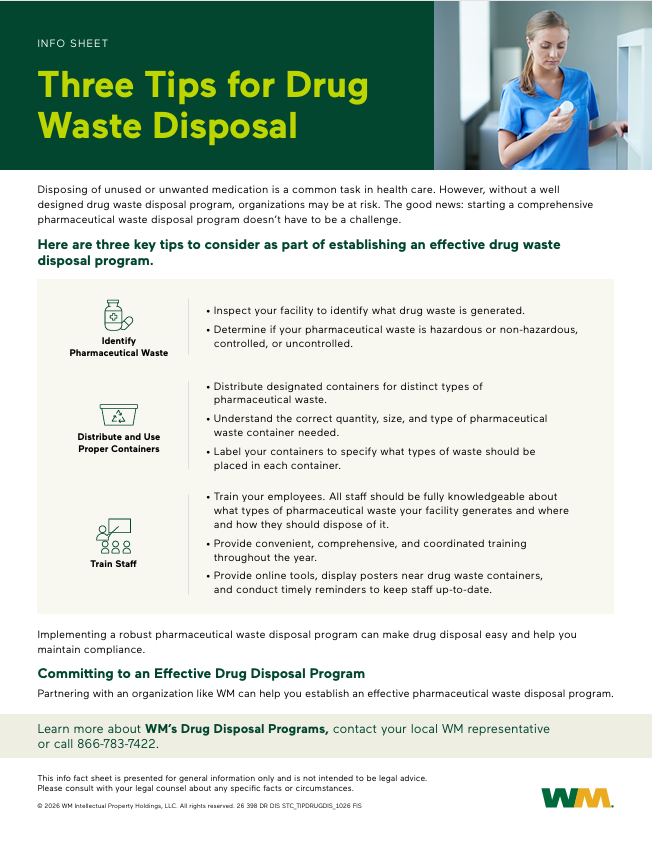
Starting a comprehensive pharmaceutical drug disposal program doesn’t have to be a challenge. There are three key steps to follow: identify pharmaceutical waste, use proper pharmaceutical waste containers, and conduct staff training.
Identify Drug Waste
The U.S. Environmental Protection Agency (EPA) regulates solid waste disposal, and federal law mandates that all waste generators decide whether the waste they are generating is hazardous. For pharmaceutical waste, this includes a determination of whether the material is a hazardous waste pharmaceutical or a non-hazardous waste pharmaceutical. The management of hazardous waste pharmaceuticals is regulated under the Resource Conservation and Recovery Act (RCRA). As one initial step, staff should thoroughly inspect a facility to identify what drug waste is being generated and determine if the waste is hazardous or non-hazardous.
Before disposal, it is also important to determine whether the pharmaceutical waste is a controlled substance regulated by the Drug Enforcement Administration (DEA) – which is subject to additional handling requirements.
Organizations like WM can assist larger generators and smaller healthcare facilities with the identification and characterization of pharmaceutical waste.
Use Proper Drug Waste Containers
Once the pharmaceutical waste is categorized, it should be disposed of in the correct containers. Hazardous waste pharmaceuticals are typically collected in black containers. The disposal of non-hazardous waste pharmaceuticals may or may not be regulated, depending on your state. Under many of WM’s programs, this type of waste may be placed in blue containers.
The waste can then be transported to an appropriate treatment facility (which may be a medical or hazardous waste incinerator, depending on the material, your location, and your waste program). The EPA requires that most hazardous waste pharmaceuticals be incinerated and recommends that non-hazardous waste pharmaceuticals also be disposed of using this method.
Train Staff to Properly Segregate and Manage Pharmaceutical Waste
Sometimes staff members—especially those in smaller physician practices—don’t know where to dispose of unused or unwanted medication or don’t understand the requirements associated with proper drug disposal. This is why staff education is critical.
Healthcare organizations should train all staff on proper drug waste segregation and handling. Additionally, employees who prepare hazardous materials, which can include pharmaceutical waste, for transport must complete the training required by the U.S. Department of Transportation (DOT) upon initial assignment to those duties and at least every three years after.
Training for all staff should be convenient, comprehensive, and conducted regularly. Online tools, posters displayed near drug waste containers, and timely reminders and alerts can help get staff up-to-date and also remind them of the rules throughout the year.
Creating a robust pharmaceutical drug disposal program can make drug disposal easy—while also helping you to be compliant. Download our Drug Disposal Tip Sheet to take the first steps. Contact us to find out how we can help your organization manage pharmaceutical waste disposal.
This article is for general information purposes only and should not be construed as legal advice on any specific facts or circumstances.
Tips for Effective Drug Waste Disposal
Download Now
Related Content

Controlled Substance Disposal: Inventory vs. Wastage
August 10, 2026

Managing Category A Waste in Healthcare: Key Preparedness Considerations
July 08, 2026
Understanding OSHA’s HazCom Standard & Training Requirements
May 19, 2026

What Patients and Caregivers Should Know About Disposing of Cancer Drugs...
March 03, 2026
