The Importance of Safe Needle Disposal in Public Restrooms
The use of self-injected medications to treat chronic illnesses such as diabetes, allergies, migraines, and obesity has increased in recent years. More than 3 billion such injections are administered outside of healthcare facilities by an estimated 9 million people using devices such as prefilled syringes and auto-injectors that utilize needles, classified as medical sharps.
For those who depend on timely injections for their health, they often have to do so away from home. They may seek the privacy of a public restroom to inject their medication discreetly and safely. However, disposing of the sharp can be a challenge. What happens if there’s no receptacle specifically for sharps?
The widespread use of self-injected medications, along with an unwavering commitment to employee and customer safety, has prompted many companies to seek solutions for proper disposal. The goal is to reduce the risk of needlestick injuries in their locations.
A WM survey found:
Among customers who consider restroom sharps programs important, 75% said they’d use a sharps container in a public space or establishment if they saw one;
42% said that a lack of safe disposal options in public spaces is the biggest challenge they face when discarding sharps.
Without proper disposal containers, people often discard sharps in an unsafe manner. Of the survey responders who have disposed of them in a public trash can, 38% said they did so because they had no choice – there were no safe disposal containers.
The Risks of Improper Disposal of Needles
When sharps are discarded in the regular trash, they present a public and environmental safety hazard and increase the risk of needlestick injuries. Not only could the individual handling the sharp be injured, but so could someone collecting the trash through contact with an exposed needle. When a contaminated sharp penetrates the skin, there’s risk of bloodborne pathogens transmission— infectious microorganisms in human blood that can cause disease in humans. In some cases, this transmission can lead to serious illnesses, such as hepatitis B and C and HIV.
WM’s survey of organizations found that among those who consider restroom sharps programs important, 52% said that occupational health, employee safety, and compliance with regulatory guidance were primary drivers of program adoption.
The Need for More Accessible Sharps Disposal in Other Locations
The risk of improperly disposed of sharps extends into public settings. As the use of self-injectable medications to treat conditions like psoriasis, multiple sclerosis, migraines, obesity, arthritis, and diabetes, settings, such as workplaces, retail locations, and schools, should also consider installing sharps disposal containers on their premises.
These containers should be placed in accessible areas like restrooms or First Aid rooms, allowing for safe, convenient, and private sharps disposal. This practice offers peace of mind to individuals performing injections outside their homes as well as safeguards for the people using that public space, such as employees, customers, janitorial and other waste workers from potential needlestick injuries.
The Benefits of Accessible Sharps Disposal Programs in Public Restrooms
Having a safe place set up for people to properly dispose of sharps is critical for several reasons:
Easily accessible sharps disposals help promote a safe, healthy, and positive environment for employees and customers.
By demonstrating a commitment to social and environmental responsibility through sharps disposal in public spaces, companies can elevate their brand.
Staff are better protected from accidental needlestick injuries when cleaning restrooms and removing trash.
Responsible disposal not only helps safeguard the community and the environment but also ensures that sharps are disposed of properly in accordance with all applicable laws.
Sharps Disposal Made Easy with a Trusted Partner
Trusted partners like WM offer cost-effective services such as SafeDrop™ Restroom Sharps Disposal Programs for the safe, convenient, and anonymous disposal of used needles. Through SafeDrop™, WM offers flexible sharps waste mail-back solutions with the following features:
Cost-efficient solution for sharps waste: WM provides sharps containers in different sizes to accommodate large and small volumes of sharps waste. In select markets and for high-volume use, SafeDrop™ features traditional route-based services with WM service technicians managing container exchange.
All-in-one sharps management kit: SafeDrop™ mail back kits include everything needed to collect sharps and mail them back to WM for treatment and disposal. With a convenient auto-replenishment option, it is easy to manage container inventory.
USPS Approved: WM’s sharps mail back containers and kits are United States Postal Service (USPS) approved for transportation via the mail.
FDA Approved: WM’s sharps containers are Food and Drug Administration (FDA) approved.
The sharps mail-back program includes:
Sharps container and plastic liner
Step-by-step instructions
Pre-addressed, postage-paid return shipping labels
Barcoded return shipping container
Prepaid sharps treatment and disposal
Serialized tracking documents
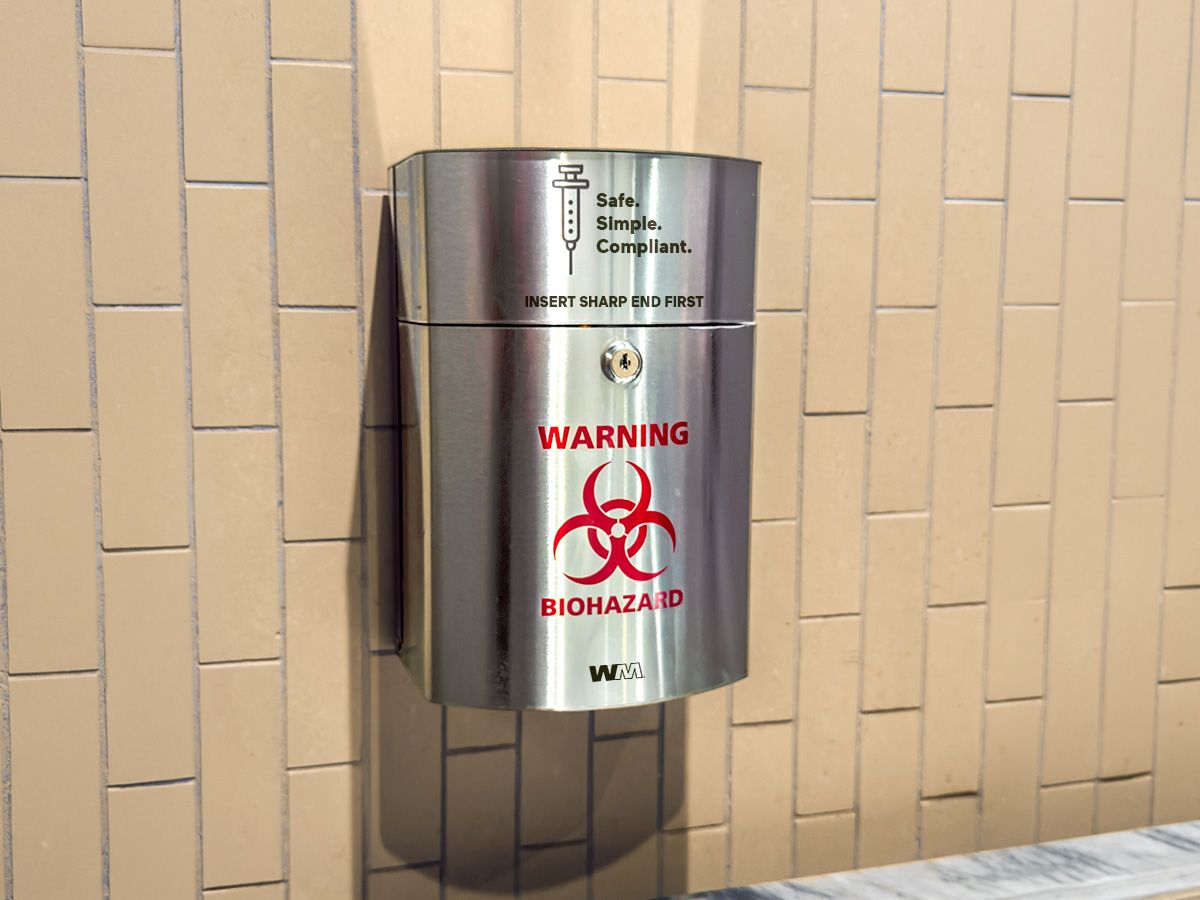
WM’s SafeDrop™ solution offers sharps containers in various sizes that can be securely mounted to restroom walls. One popular option is a sleek stainless-steel cabinet that accommodates a 1.4-quart sharps container, which can include your organization’s branding. Learn more about WM’s Safe Community Solutions, including options to help employees and customers safely dispose of used sharps.
This article is for general information purposes only and should not be construed as legal advice on any specific facts or circumstances.
Related Content
Controlled Substance Disposal: Inventory vs. Wastage
August 10, 2026
Managing Category A Waste in Healthcare: Key Preparedness Considerations
July 08, 2026
Understanding OSHA’s HazCom Standard & Training Requirements
May 19, 2026

What Patients and Caregivers Should Know About Disposing of Cancer Drugs...
March 03, 2026
