Creating RMW Packaging Processes
Healthcare organizations that generate medical or other biohazardous waste must package it appropriately for disposal to ensure staff, patient and environmental safety, as well as maintain compliance with federal, state and local regulations. While this may seem straightforward, organizations sometimes struggle to consistently and correctly segregate, package and dispose of regulated medical waste (RMW).
Best practices involve developing clear packaging procedures and making sure staff are aware of and reliably follow them. The roadmap below can guide the process of creating procedures and yield a comprehensive and compliant approach.
Understand What RMW Is and Why Proper Waste Segregation Is Important
The first step in establishing RMW packaging procedures is deciding what constitutes regulated medical waste. Unfortunately, there is not a universally accepted definition, and federal and state agencies have some variance on what falls within the category. That said, a good working definition is any waste that has the potential to cause infection and has regulations around its collection, transportation, treatment and disposal.
Based on that description, the RMW category would include biohazardous items that are saturated with liquid or semi-liquid blood or other potentially infectious materials (OPIM). Some examples may include contaminated disposable gowns, used gauze and procedural drapes. In addition, due to the COVID-19 public health crisis, some organizations are starting to view personal protective equipment (PPE) used when treating COVID patients as RMW.
Contaminated sharps, including used needles, scalpels or syringes, would also qualify. Sharps should be placed in specially designed, leak- and puncture-proof containers after use. These containers should also be clearly labeled biohazardous to ensure proper handling.
Once an organization determines the RMW it generates, guidelines must be created for segregating that waste. Proper segregation of RMW includes separate waste streams for biohazardous waste, sharps, pathological waste, chemotherapeutic waste and pharmaceutical waste. This ensures that each type of waste is properly disposed of and does not pose a threat to health or environmental safety.
Know Which Regulating Agencies Govern RMW Disposal
There are several regulatory bodies concerned with RMW, and depending on the agency, their focus varies. The Occupational Safety and Health Administration (OSHA) is concerned with the risks this type of waste poses for healthcare workers. OSHA’s Bloodborne Pathogen Standard requires organizations to have policies and training that address proper biohazardous waste handling.
The Department of Transportation (DOT) is most involved with ensuring safe transportation of RMW from where it is generated to its disposal site, using incineration or autoclaving processes.
The Environmental Protection Agency (EPA) develops regulations to prevent contaminates from entering the environment, including specific requirements about where and how waste can be disposed.
Other interested parties include non-regulatory organizations such as the Joint Commission, and local and state governments, which offer rules, regulations and standards that govern the entire disposal process. While some requirements overlap, many do not. There are also variances between local, state and federal regulations. So, it is critical when drafting RMW waste policies to look at state and local requirements first because these may supersede others.
Delineate Proper RMW Packaging Steps
After gathering information about the what and why of RMW disposal, organizations must address the how. Following are the key steps involved in the packaging process:
Step 1: Choose a suitable regulated medical waste container. Organizations can either use corrugated boxes or specially designed reusable containers to hold RMW. Corrugated boxes should be sealed on the bottom with two-inch wide, clear, packing tape. Printed text and arrows should differentiate the receptacle’s top and bottom. Reusable containers typically do not require special set up. For both disposable and reusable containers appropriate marking and color-coding are required.
Step 2: Line the medical waste container with a red biohazard bag. Be sure to use a red bag designed for this purpose. Not only are they meant to effectively contain the waste, they also indicate by their color and labeling that the waste is biohazardous. The bag must line the inside of the receptacle, overlapping its four outer sides. Note that different states may have different requirements for bag thickness and weight limitations.
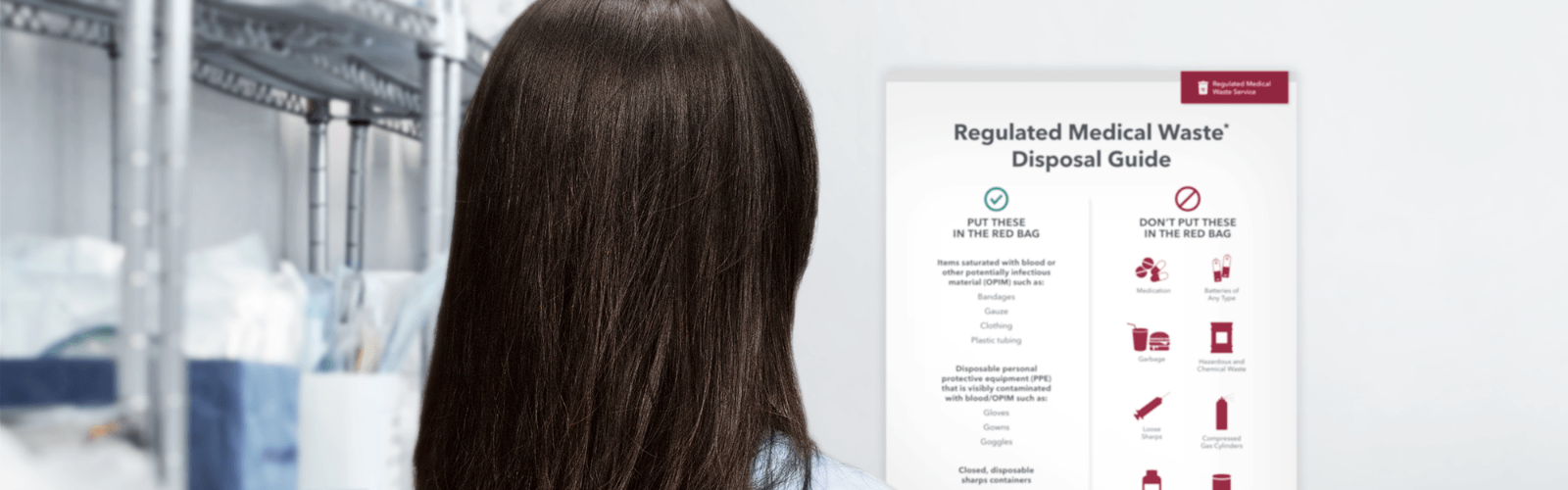
Step 3: Place the appropriate medical waste in the lined container. In addition to outlining what should go in the RMW container, it’s equally important to indicate what should not. Medications, loose needles, syringes, general trash and recycling CANNOT be thrown away in a red bag.
Sharps should be disposed of in a closed, puncture-resistant container, and pharmaceutical waste should be placed in its own designated, color-coded receptacle. Trace chemotherapy waste and pathological waste, although forms of RMW, should be further segregated as well and marked for incineration.
Step 4: Tie the bag. Make sure there is room at the top of the bag before tying it. Staff must wear gloves when securing the bag, gathering its edges and twisting the top to seal the contents. They then should make a strong, hand-tied single or gooseneck knot to prevent any leakage. Staff can also use a zip tie or tape to secure the knot, although different facilities may have different rules as to which is used.
Step 5: Prepare the waste for pickup. Once secured, the bag should be placed in a transport container, which should be sealed. If using a reusable transport container, staff should engage the auto-locking flaps or secure the lid depending on the receptacle design. For corrugated transport containers, staff should seal the top of the box with two-inch wide, clear packing tape. Closed red bags should not be visible once the outer container is closed and sealed.
Step 6: Check the markings. The outer box should have appropriate labeling that meets federal, state and local requirements. It also should include any bar codes or other information the organization’s waste hauler requires. Some states require additional information.
Develop and Implement Staff Training
Staff members that work in areas where RMW is generated should receive training on how to properly handle and dispose of contaminated materials. Similarly, staff in charge of preparing waste for pickup should receive training as well. Topics to cover include what items should be segregated, how to package waste and the risks if RMW is managed incorrectly.
Training should occur during orientation and as part of annual refresher events. Online modules can be especially beneficial because staff can access them at their convenience and training is documented once completed. If policies or procedures have changed due to COVID-19, providing refresher training upon return could be beneficial.
Periodically “Audit” the Process to Make Sure Practice Follows Policy
Organizational leaders should observe whether staff are following defined RMW procedures. If they notice lapses, it may indicate the need for further education and training. This could range from a mention in the next staff meeting to on-the-spot course correction to additional training offered virtually.
Monitoring whether employees are strictly adhering to policies and procedures is especially critical now given that some staff have been away from the daily operations they’re accustomed to. Observing the behavior of staff is one of the best ways to correct mistakes as they happen and to form habits that promote safety and compliance.
Ensure Your Organization Has a Compliant Regulated Medical Waste Disposal Process
While good processes are essential for proper RMW disposal, a reliable waste management partner is also key. Learn more about how WM can help you maintain a safe and compliant regulated medical waste program.
This article is for general information purposes only and should not be construed as legal advice on any specific facts or circumstances.
Related Content

Controlled Substance Disposal: Inventory vs. Wastage
August 10, 2026

Managing Category A Waste in Healthcare: Key Preparedness Considerations
July 08, 2026
Understanding OSHA’s HazCom Standard & Training Requirements
May 19, 2026

What Patients and Caregivers Should Know About Disposing of Cancer Drugs...
March 03, 2026
