CsRx® Containers: A Valuable Solution for Mitigating Drug Waste Diversion
Every year, the opioid crisis takes a heavy toll across the United States. With just 4.4% of the world’s population, the country consumes more than 80% of the world’s opioids. According to data released by the Centers for Disease Control and Prevention (CDC), in 2024 alone, nearly 80,719 Americans lost their lives to drug overdoses.
Healthcare organizations and facilities play a crucial role in combating the crisis. One important step is ensuring the responsible and secure disposal of controlled substances to prevent misuse and diversion. The use of drug sequestration units, like CsRx®, can help prevent these drugs from falling into the wrong hands.
WM's controlled substance wastage containers provide a valuable solution and offer an effective, simple, and safe way to handle drug waste. These specially designed containers help make it easy to securely capture and deactivate controlled substance waste right after patient care, reducing the risk of drugs being misused. Once collected, the containers are incinerated, not only preventing drug diversion but also keeping harmful substances out of our water systems—better than flushing them down the drain. WM’s CsRx® Controlled Substance Waste Service includes the following components:
Interactive Online Training Module: Easy-to-follow training for your staff on safe medication waste handling.
Onsite Installation: Secure, lockable wall brackets installed by our expert team.
Prefilled Containers: Each comes ready with agents to deactivate, deter misuse, and solidify contents for safe storage and transport.
Ongoing Support: Proactive container management for full-service customers.
Final Disposal by Incineration: Destruction by incineration ensures waste is destroyed safely and responsibly.
With these comprehensive measures, the CsRx® containers can help you mitigate the risk of drug waste diversion at your facility and send your waste for incineration, protecting individuals and the environment from potential harm that may result from disposing of the drugs down the drain.
How to Properly Dispose of Controlled Substances
Controlled substances are drugs regulated by the Drug Enforcement Administration (DEA), which assigns them to one of five schedules based on their medical use and potential for abuse. Here are some examples of drugs that have been scheduled by the DEA:
Schedule I: Heroin, LSD, Ecstasy, Marijuana
Schedule II: Oxycodone, Fentanyl, Dilaudid, Methadone
Schedule III: Ketamine, Tylenol w/ Codeine, Testosterone
Schedule IV: Ativan, Xanax, Darvocet, Valium
Schedule V: *Robitussin AC, Lomotil, Lyrica
Schedule I substances have a higher potential for psychological and/or physical dependence, whereas Schedule V drugs are those that have the least potential for abuse. Prescription opioids, such as oxycodone, hydrocodone, and morphine, are Schedule II controlled substances at the federal level.
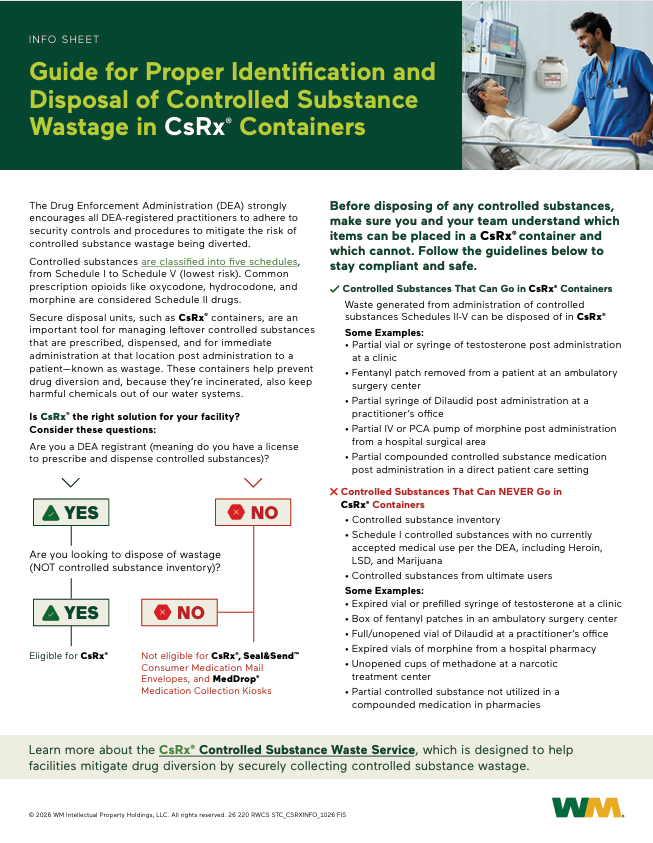
When disposing of controlled substances, it’s important to know the difference between wastage and inventory, as inventory cannot be placed in CsRx® containers.
Inventory: Refers to the controlled substances that belong to the registrant, who holds the responsibility for their use, transfer, and disposal as outlined by DEA regulations. Proper disposal of inventory requires rendering it non-retrievable. Some examples of inventory include:
Expired vial or syringe of testosterone at a clinic
Box of fentanyl patches in an ambulatory surgery center
Full/unopened vial of Dilaudid at a practitioner's office.
Expired vials of morphine from a hospital pharmacy
Unopened cups of methadone at a narcotic treatment center
Partial controlled substance not utilized in a compounded medication in pharmacies
In all the examples above, the material is part of the facility's inventory and is not eligible for disposal in CsRx®.
Wastage: Wastage refers to what is remaining after a controlled substance has been prescribed and dispensed by a practitioner for immediate administration to a patient at a registered location pursuant to an order for medication. The DEA does not mandate destroying this type of waste, meaning it does not need to be rendered non-retrievable. However, the DEA strongly recommends that practitioners implement security controls to prevent the diversion of wastage. Some examples of wastage include:
Partial vial or syringe of testosterone post administration at a clinic
Fentanyl patch removed from a patient at an ambulatory surgery center
Partial syringe of Dilaudid post administration at a practitioner’s office
Partial IV or PCA pump of morphine post administration from a hospital surgical area
Partial compounded controlled substance medication post administration in a direct patient care setting
Learn more about WM’s CsRx® Controlled Substance Waste Service, which is designed to help practitioners that are DEA registrants mitigate the risk of drug diversion. WM also offers services designed to help ultimate users (patients) dispose of their controlled substance medications, including Seal&Send™ Consumer Medication Mail Envelopes and MedDrop™ Medication Collection Kiosks.
Frequently Asked Questions
Which Controlled Substances Can Go in CsRx® Containers?
Wastage from controlled substances included in DEA Schedules II-V can be disposed of in CsRx® containers.
Which Controlled Substances Can Never Go in CsRx® Containers?
Controlled substance inventory (expired, recalled, damaged and other unwanted controlled substances)
Schedule I controlled substances(substances with no currently accepted medical use per the DEA, including Heroin, LSD, and Marijuana)
Controlled substances from ultimate users(the person the controlled substance was prescribed to), including abandoned controlled substances left at a doctor’s office or police station
How to Dispose of Controlled Substance Wastage in a Hospital?
Registered practitioners can utilize a trusted ally, like WM, to manage wastage in a sequestration device to help protect against diversion. WM’s program provides deactivation of controlled substance wastage, acts as a deterrent to prevent ingestion of contents, and facilitates the solidification of waste for safe storage and transportation.
How Can Healthcare Organizations Help Mitigate the Risk of Drug Misuse?
Healthcare organizations can help mitigate the risk of medication diversion and abuse by following proper waste management processes, particularly when it comes to disposing of controlled substances.
This article is for general information purposes only and should not be construed as legal advice on any specific facts or circumstances.
CsRx® Containers: A Valuable Solution for Mitigating Drug Waste Diversion
Download Now